


Cargo Boeing 747 crashes at Bagram Airfield

A civilian cargo aircraft crashed at Bagram Air Field near the Afghan capital Kabul on Monday, killing all seven people aboard.. The plane came down shortly after take-off and crashed within the boundaries of the US-run airbase, a NATO spokesperson at the base said. The Taliban quickly claimed responsibility for the crash, but the coalition dismissed the claim as “false” in a statement to AP. The cause of the crash is being investigated by emergency crews, but no sign of insurgent activity in the area was spotted at the time.


facebooktwittergoogle_plusredditpinterest

Deadly Raid: 10 kids killed in US airstrike in Afghanistan

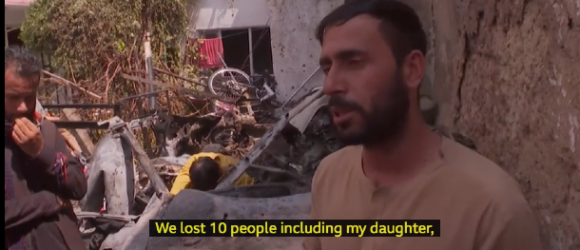
At least 10 children are reported to have been among 18 people killed today in the latest airstrike by U.S. led forces in Afghanistan. The raid was allegedly called in by troops on the ground, after bitter fighting nearby.


facebooktwittergoogle_plusredditpinterest

Afghans ready to exploit country’s massive mineral wealth


Stratrisks

Afghanistan plans to put four or five oil and gas extraction and minerals mining projects out to tender for development this year, as the strife-ridden country reaches out to investors to help develop its vast resources.

The projects involves the exploration and development of oil, natural gas, iron ore, copper and gold, the country’s minister of mines, Wahidullah Shahrani, said last week.

“We plan to put out tenders in two new basins for oil and gas exploration this year and two more next year or 2015,” he said. “Afghanistan has the potential to be more than self-sufficient in oil and gas.”

Afghanistan aims to raise the contribution of the resources industry to the nation’s economic output to 45 per cent by 2024, up from 3 per cent last year, Shahrani said.

The nation, which has suffered decades of strife since the 1970s, including two civil wars, also plans to put one or two lithium and rare earth projects out to tender this year, he said. The minerals are used by battery and electronic product manufacturers.

While the country is currently one of the poorest in the world judged by GDP per capita, the US Geological Survey estimated in 2010 that Afghanistan’s mineral resources were worth some US$1 trillion.

But under-developed infrastructure, corruption and security problems have kept most Western firms away from investing in the nation, leaving Chinese and Indian state-backed firms as Afghanistan’s biggest infrastructure builders and resources developers.

The state-owned China National Petroleum Corp (CNPC), the parent of the listed company PetroChina and the mainland’s largest oil and gas producer, committed last year to investing US$600 million to explore and develop areas previously explored by Russian firms more than four decades ago.

Shahrani said commercial production is expected to start this year, with the output destined for domestic consumption.

Kabul is in negotiations with a consortium consisting of the state-backed company Turkish Petroleum, Dragon Oil, which is based in Dubai, and the independent oil and gas firm Kuwait Energy on an oil and gas exploration and development deal worth more than US$1 billion, Shahrani said.

Metallurgical Corporation of China joined Jiangxi Copper in 2007 to sign a deal to develop the Aynak copper mine near Kabul. The two companies committed to spend US$3 billion to US$4 billion to develop the mine, subject to the completion of feasibility studies.

Read More

facebooktwittergoogle_plusredditpinterest

EXPOSED: Real Reasons Behind NATO’s Afghan War

Stuart James Hooper

Spoiler: It sure isn’t to fight for your freedoms…

[youtube=http://youtu.be/-HdJ-tUakwg]
-
facebooktwittergoogle_plusredditpinterest

Like the Taliban, BBC Erase Banksy Artwork Which Exposed Their Internal Savile Cover-up

What Do The Taliban And The BBC Have In Common?

The Needle Taliban Before……. and After the Taliban BBC Before and……and After the BBC Yes, that’s right, they both destroy great works of art in pursuit of their closed minded ideology. Banksy, to my mind the UK’s greatest living artist (and actually, yes, I could justify that statement) created a piece of meaningful art outside of BBC Television Centre in central London which summed up just how disillusioned the British public, especially of my generation, feel right now. It was the poignant image of a young boy dropping his ‘Jim’ll Fix It’ medal into a drain. The BBC sent the workmen in to scrub it away. Why ? Because it implied criticism of the corporation. All great art speaks, all great art stimulates thought, all great art, from Giotto via Manet’s ‘Olympia’ and beyond Picasso’s ‘Guernica’ to the present day, has been provocative. The cultural philistines at the BBC can have as many Yentob inspired documentaries as they like but until they put artistic creation above managerial expediency they can never be a Corporation that Broadcasts for the British license fee paying public. And do they own that hoarding ? Does the BBC actually own that piece of hardboard that Banksy chose to place this artwork ? And if the BBC are sued because a precious work of art has been destroyed and they didn’t own the hardboard hoarding opposite BBC Telivision Centre, who pays ? Not the BBC management on their ludicrously high salaries, but all of us who pay the BBC license fee. Just like McAlpine’s £185,000.

RELATED: THE BBC: IT’S THE VATICAN AND THE MAFIA ALL ROLLED INTO ONE

facebooktwittergoogle_plusredditpinterest

Handover Hangover: Karzai orders Afghan control of Bagram base

Afghanistan’s president Hamid Karzai has ordered his top security officials to take full control of the prison at Bagram air base. It’s still run by the US – despite an agreement to transfer power to Afghan authorities signed back in March. facebooktwittergoogle_plusredditpinterest

Spreading Freedom, Democracy: Video Shows Drunk, Stoned US Security Contractors in Afghanistan

Cellphone video recorded earlier this year at an operations center of a U.S. security contractor in Kabul, Afghanistan appears to show key personnel staggeringly drunk or high on narcotics, in what former employees say was a pattern of outrageous behavior that put American lives at risk and went undetected by U.S. military officials who are supposed to oversee such contractors. The video, provided to ABC News by two former employees, is scheduled to be broadcast in a report this evening on “ABC World News with Diane Sawyer” and “Nightline.” Asked if a response to an attack by terrorists would have been possible during the events seen on the video, one of the former employees, Kenny Smith, told ABC News Chief Investigative Correspondent Brian Ross, “No, sir.” Questions posed by ABC News to the Pentagon have sparked a criminal investigation by the U.S. Army, a spokesman says.

The contractor, Virginia-based Jorge Scientific, has won almost $1 billion in U.S. government contracts.

WATCH NEW VIDEO OF CONTRACTORS PARTYING IN AFGHANISTAN ON US TAXPAYER’S DIME HERE Source: ABC FLASHBACK: Last year, similar behaviour, although less shocking was revealed regarding US defense contractors working at home: Three cheers for the American defense industry’s workforce. Looking good! ….facebooktwittergoogle_plusredditpinterest

SLIPPING AWAY: 8 green-on-blue killings sweep Afghanistan over weekend

RT Eight coalition soldiers were killed in three separate attacks across Afghanistan since Friday, as the trend of Afghan soldiers firing on coalition troops worsens for NATO. Afghanistan has witnessed a dramatic uptick in 2012 in green-on-blue killings – ‘green’ the NATO code for local Afghan soldiers, ‘blue’ for NATO soldiers – prompting increasing concern among NATO and the ISAF (International Security Assistance Force) ahead of their scheduled 2014 pullout. Sunday’s attacks, in which four coalition soldiers were killed, pushed the total number of coalition troops killed in such incidents this year to a record 51, up from 35 last year – a major spike in what was deemed a ‘minor problem’ a few years ago. In an attack on Friday evening, two UK soldiers with a NATO-led deployment in southern Afghanistan were killed by a man wearing the uniform of the Afghan police. Three others were wounded in the attack, after which a soldier returned fire and killed the assailant. On Saturday, another individual believed to be a member of the Afghan police killed two more British NATO servicemembers in the country’s southern Helmand province. That attack also ended in the gunman being killed by return fire. The deadliest of the weekend’s green-on-blue assaults came on Sunday in Zabul Province, with four coalition servicemembers killed. Reports claimed that there were multiple gunmen, and that the attack was “suspected to involve members of the Afghan police” and was “under investigation.” Later in the day, the Pentagon confirmed all the four people killed in the insider attack were Americans.

‘We take this very seriously’

With the 2014 pullout deadline fast approaching, commanders are weighing an array of tactics to solve the problem. New vetting procedures have been instituted. Amidst what may be a new atmosphere of distrust between NATO trainers and Afghan Police trainees, “hundreds” of Afghan trainees were dismissed from duty over document irregularities, the New York Times reported. ‘Sensitivity’ and cultural training has also been increased, and a 28-page booklet titled ‘A Brochure for Comprehending the Cultures of the Coalition Forces’ has been distributed among Afghan troops. “Coalition troops may ask about the women in your family. Do not take offense, they just want friendly relations with you. In return, teach them that Afghans do not discuss their families’ women with others,” and “As you know, Afghans in the presence of others do not blow their noses. This practice is very common in the culture of coalition countries. If a member of the coalition forces blows his nose in your presence, please don’t consider this an offense or an insult,” the brochure reads. The sheer number of green-on-blue incidents has led to some to speculate that the problem is more than just a cultural issue; some suspect that these attacks are the direct result of NATO’s near-complete lack of on-the-ground intelligence in Afghanistan. In January 2010, Major General Michael Flynn published a report in cooperation with a Washington thinktank, which argued that “Eight years into the war in Afghanistan, the US intelligence community is only marginally relevant to the overall strategy,” and that “the vast intelligence apparatus is unable to answer fundamental questions about the environment in which US and allied forces operate and the people they seek to persuade.” Officers deployed in Afghanistan are “ignorant of local economics and landowners, hazy about who the powerbrokers are and how they might be influenced,” Flynn said. Journalist and author Jere van Dyk echoed Flynn’s concerns in a recent RT interview“How many Pashtun speakers are there? When you talk to, for example, interpreters, you find out that there is a huge underground network of interpreters, all of whom have to pay bribes before they can work with the American soldiers. Who controls these interpreters? I’m not sure they are completely free at all. The Taliban could easily infiltrate this [network], this was my experience.” As efforts to stem the tide of green-on-blue killings increase, and nerves continue to fray in the run-up to NATO’s 2014 pullout, there are no easy answers for the NATO-led coalition. In a statement released on September 6, ISAF commander Gen. John R. Allen said, “I can assure our friends and foes alike that I take this issue very seriously and my entire command is absolutely driven to do everything we can to reduce this threat. … It is a threat to both green and blue that requires a green and blue solution.”facebooktwittergoogle_plusredditpinterest

Libya says NATO raids killed 718 civilians so far

By Imed Lamloum AFP June 1, 2011  Libya has accused NATO of killing 718 civilians and wounding 4,067 in 10 weeks of air strikes, as African efforts for a truce stalled and Italy said Muammar Gaddafi’s regime is “finished.” The toll of dead and injured was given at a news conference on Tuesday in Tripoli by government spokesman Mussa Ibrahim, who also warned the departure of Gaddafi would be a “worst case scenario” for Libya. “Since March 19, and up to May 26, there have been 718 martyrs among civilians and 4,067 wounded – 433 of them seriously,” Ibrahim said, citing health ministry figures which cannot be independently verified. He said these figures do not include Libyan military casualties, a toll the defense ministry refuses to divulge.
“If Gaddafi goes, the security valve will disappear,” Ibrahim said, ruling out that the embattled strongman will step down from power. “Gaddafi’s departure would be the worst case scenario for Libya,” he told reporters, and warned of “civil war.”

DEAD LIBYANS: Nato attack has left hundreds of innocent Libyans in the body count column..

Ibrahim also denied that South African President Jacob Zuma, who met Gaddafi in Tripoli on Monday, had discussed an “exit strategy” with him. Zuma “never discussed any exit strategies as they have been described in the media,” the spokesman said. Earlier, a statement from the South African presidency in Pretoria said Gaddafi would not leave Libya despite growing international pressure and intensified NATO strikes on his regime. “Colonel Gaddafi called for an end to the bombings to enable a Libyan dialogue. He emphasised that he was not prepared to leave his country, despite the difficulties,” Zuma’s office said in a statement. NATO pounded Tripoli earlier on Tuesday, only hours after Zuma left Libya’s capital having failed to close the gap between Gaddafi and rebels fighting to oust him since February. In its latest operational update, NATO said on Tuesday it struck four military sites in the vicinity of Tripoli, including missile launchers, a vehicle storage facility and a radar. Elsewhere it took out a command and control node and several tanks, truck-mounted guns and other military vehicles in and around Misrata, the main rebel-held city in western Libya. Zuma said raids by NATO, which is enforcing a no-fly zone over Libya and protecting civilians from a government crackdown under a UN mandate, were undermining African mediation efforts. South African Foreign Minister Maite Nkoana-Mashabane called for an immediate ceasefire after Zuma said Gaddafi was “ready” to implement an African Union peace plan already rejected by NATO and the rebels. In the rebel capital Benghazi, in eastern Libya, Italy’s foreign minister said on Tuesday Gaddafi’s regime was already staring at defeat. “The Gaddafi regime is finished, he must leave office, he must leave the country,” Franco Frattini told a joint news conference with Ali al-Essawi, the rebels’ foreign affairs chief. “His aides have left, he has no international support, the G8 leaders reject him, he must go.” Frattini was speaking ahead of a ceremony to inaugurate a new Italian consulate in the eastern city, in another major blow to Gaddafi after NATO insisted his “reign of terror” is nearing an end. Italy, the former colonial ruler of Libya and strategic economic partner with Gaddafi’s regime, has joined international calls led by Britain, France and the United States for the Libyan leader to go. In Washington, State Department spokesman said US Secretary of State Hillary Clinton will visit the United Arab Emirates on June 9 for a meeting of the Libya contact group. “This meeting will build on the last contact group meeting held in Rome,” and will allow the United States and its partners to discuss implementation of UN Security Council resolutions 1970 and 1973, Mark Toner told reporters. UN under secretary general B Lynn Pascoe told the UN Security Council meanwhile that at least 1,200 people have been killed or are missing after trying to flee Libya by boat since the start of the uprising against Gaddafi mid-February. At the same time, the official TAP news agency reported from Tunis on Tuesday that five more officers have joined the flow of defectors from Gaddafi’s regime, arriving at the weekend in neighbouring Tunisia. The colonel and four lieutenant colonels as well as four rank-and-file soldiers arrived by boat on Sunday, the report said. In Rome on Monday, five generals, two colonels and a major announced they had defected from Gaddafi’s forces, calling on other officers to follow their example. Abdel Rahman Shalgham, a former foreign minister who was Tripoli’s UN representative before switching sides, told a news conference that around 120 officers had defected in recent days.
© 2011 AFPfacebooktwittergoogle_plusredditpinterest

Welcome to the Violent World of Mr. Hopey Changey

By John Pilger Information Clearing House June 1, 2011 - When Britain lost control of Egypt in 1956, Prime Minister Anthony Eden said he wanted the nationalist president Gamal Abdel Nasser “destroyed … murdered … I don’t give a damn if there’s anarchy and chaos in Egypt”. Those insolent Arabs, Winston Churchill had urged in 1951, should be driven “into the gutter from which they should never have emerged”.  The language of colonialism may have been modified; the spirit and the hypocrisy are unchanged. A new imperial phase is unfolding in direct response to the Arab uprising that began in January and has shocked Washington and Europe, causing an Eden-style panic. The loss of the Egyptian tyrant Mubarak was grievous, though not irretrievable; an American-backed counter-revolution is under way as the military regime in Cairo is seduced with new bribes and power shifting from the street to political groups that did not initiate the revolution. The western aim, as ever, is to stop authentic democracy and reclaim control.

AN ELITE AGENDA: Obama is doing the job he was hired to do by his elite masters.

Libya is the immediate opportunity. The Nato attack on Libya, with the UN Security Council assigned to mandate a bogus “no fly zone” to “protect civilians”, is strikingly similar to the final destruction of Yugoslavia in 1999. There was no UN cover for the bombing of Serbia and the “rescue” of Kosovo, yet the propaganda echoes today. Like Slobodan Milosevic, Muammar Gaddafi is a “new Hitler”, plotting “genocide” against his people. There is no evidence of this, as there was no genocide in Kosovo. In Libya there is a tribal civil war; and the armed uprising against Gaddafi has long been appropriated by the Americans, French and British, their planes attacking residential Tripoli with uranium-tipped missiles and the submarine HMS Triumph firing Tomahawk missiles, a repeat of the “shock and awe” in Iraq that left thousands of civilians dead and maimed. As in Iraq, the victims, which include countless incinerated Libyan army conscripts, are media unpeople. In the “rebel” east, the terrorising and killing of black African immigrants is not news. On 22 May, a rare piece in the Washington Post described the repression, lawlessness and death squads in the “liberated zones” just as visiting EU foreign policy chief, Catherine Ashton, declared she had found only “great aspirations” and “leadership qualities”. In demonstrating these qualities, Mustafa Abdel Jalil, the “rebel leader” and Gaddafi’s justice minister until February, pledged, “Our friends … will have the best opportunity in future contracts with Libya.” The east holds most of Libya’s oil, the greatest reserves in Africa. In March the rebels, with expert foreign guidance, “transferred” to Benghazi the Libyan Central Bank, a wholly owned state institution. This is unprecedented. Meanwhile, the US and the EU “froze” almost US$100 billion in Libyan funds, “the largest sum ever blocked”, according to official statements. It is the biggest bank robbery in history. The French elite are enthusiastic robbers and bombers. Nicholas Sarkozy’s imperial design is for a French-dominated Mediterranean Union (UM), which would allow France to “return” to its former colonies in North Africa and profit from privileged investment and cheap labour. Gaddafi described the Sarkozy plan as “an insult” that was “taking us for fools”. The Merkel government in Berlin agreed, fearing its old foe would diminish Germany in the EU, and abstained in the Security Council vote on Libya. Like the attack on Yugoslavia and the charade of Milosevic’s trial, the International Criminal Court is being used by the US, France and Britain to prosecute Gaddafi while his repeated offers of a ceasefire are ignored. Gaddafi is a Bad Arab. David Cameron’s government and its verbose top general want to eliminate this Bad Arab, like the Obama administration killed a famously Bad Arab in Pakistan recently. The crown prince of Bahrain, on the other hand, is a Good Arab. On 19 May, he was warmly welcomed to Britain by Cameron with a photo-call on the steps of 10 Downing Street. In March, the same crown prince slaughtered unarmed protestors and allowed Saudi forces to crush his country’s democracy movement. The Obama administration has rewarded Saudi Arabia, one of the most repressive regimes on earth, with a $US60 billion arms deal, the biggest in US history. The Saudis have the most oil. They are the Best Arabs. The assault on Libya, a crime under the Nuremberg standard, is Britain’s 46th military “intervention” in the Middle East since 1945. Like its imperial partners, Britain’s goal is to control Africa’s oil. Cameron is not Anthony Eden, but almost. Same school. Same values. In the media-pack, the words colonialism and imperialism are no longer used, so that the cynical and the credulous can celebrate state violence in its more palatable form.       Author John Pilger’s film “The War You Don’t See”. And as “Mr. Hopey Changey” (the name that Ted Rall, the great American cartoonist, gives Barack Obama), is fawned upon by the British elite and launches another insufferable presidential campaign, the Anglo-American reign of terror proceeds in Afghanistan and elsewhere, with the murder of people by unmanned drones – a US/Israel innovation, embraced by Obama. For the record, on a scorecard of imposed misery, from secret trials and prisons and the hounding of whistleblowers and the criminalising of dissent to the incarceration and impoverishment of his own people, mostly black people, Obama is as bad as George W. Bush. The Palestinians understand all this. As their young people courageously face the violence of Israel’s blood-racism, carrying the keys of their grandparents’ stolen homes, they are not even included in Mr. Hopey Changey’s list of peoples in the Middle East whose liberation is long overdue. What the oppressed need, he said on 19 May, is a dose of “America’s interests [that] are essential to them”.  He insults us all. www.johnpilger.com facebooktwittergoogle_plusredditpinterest