


Israel and Cyprus to Hold Joint Military Exercise


StratRisks

Israel is set to send warships to the eastern Mediterranean for a joint military exercise with Cyprus, according to a report which appeared in the Cypriot Fileleftheros daily on Tuesday and which was cited by the Turkish Today’s Zaman. Cypriot Defense Minister Fotis Fotiou confirmed that the joint exercise, which will include the participation of four or five Israeli warships, is due to start on April 25, the report said.

Fotiou also noted that the exercise will focus on the security of the Eastern Mediterranean region and that of gas companies. Turkey, which does not recognize Greek Cyprus as a sovereign country, strongly objects to natural gas exploration being conducted by Cyprus in the Mediterranean, noted Today’s Zaman. However, noted the Turkish daily, in an unexpected announcement at a meeting on Monday, Turkish Energy Minister Taner Yıldız said that Turkey now considers it possible to cooperate with Cyprus and Israel in joint energy projects in the Mediterranean “so long as the political atmosphere allows it.” Two years ago, Israel began exploratory drilling in Block 12 of the Tamar natural gas field, which extends into Cypriot territorial waters. This prompted strong protests from Turkey, causing the Turkish northern half of Cyprus to mark its marine borders with Turkey and issue licenses for offshore oil and gas drilling.

Read Morefacebooktwittergoogle_plusredditpinterest

US urges Turkey for full restoration of ties with Israel

In the first leg of a 10-day overseas trip, the US Secretary of State John Kerry visited Istanbul and met with his Turkish counterpart Ahmad Davoudoglu.

Pressing Turkey for full restoration of full diplomatic relations with Israel, two sides addressed issues pertaining to Cyprus, P5+1 talks on the Iranian nuclear energy program, and the Palestinian cause. But the main item on the agenda was the crisis happening in Syria.


facebooktwittergoogle_plusredditpinterest

Pluto’s Gate Discovered: The Plutonium ‘Gate To Hell’ Found In Ancient City Of Hierapolis

Huffington Post

Hell is a hard place to describe in detail, since, after all, going there would require dying first. But in an effort to find out what the ancient version of the underworld looked like, archaeologists may have unearthed the gateway to Hades.

According to the Italian news agency ANSA, a team of archeologists working in the ancient Phrygian city of Hierapolis in southwestern Turkey claims to have located the Plutonium, or Pluto’s Gate – an ancient pilgrim site considered the entryway to the underworld. A small cave near the temple of Apollo, the Plutonium grew in association with death from deadly gases it emitted.

Francesco D’Andria of the University of Salento announced the discovery during a press conference in Turkey in mid-March, according to La Gazzetta Del Mezzogiorno.

D’Andria told Discovery News he also found remains of the temple, a pool used by pilgrims and a series of steps.

“We could see the cave’s lethal properties during the excavation. Several birds died as they tried to get close to the warm opening, instantly killed by the carbon dioxide fumes,” D’Andria added, according to Discovery News.

Austin Considine explains for VICE that the cave is a natural phenomenon, and that similar “openings in the earth’s crust” can be found elsewhere:

Such noxious portals are found around the globe. Undoubtedly the coolest, a modern day hell gate in Turkmenistan has been burning for over 40 years (the geologists who accidentally created it decided to light it on fire to protect locals from the gases, and it’s been burning ever since).

Famous authors such as Roman statesman Cicero and the Greek geographer Strabus wrote about the Plutonium during their respective eras. Alister Filippini, a researcher in Roman history at the Universities of Palermo, called the find at Hierapolis exceptional to Discovery News, saying “it confirms and clarifies the information we have from the ancient literary and historic sources.”

Hierapolis, near the modern Turkish city of Pamukkale, has been labeled a UNESCO World Heritage Site and sees more than 1.5 million visitors each year. Francesco D’Andria has been excavating in the area for years, and in 2011, he claimed to have located the tomb of Saint Philip, one of Jesus’ apostles.

facebooktwittergoogle_plusredditpinterest

Cyprus Day 2: As the Dust Settles, Talk of Reciprocity and Whispers of Retribution

“If it happened anywhere else, there would have been riots in the streets”

CapturePatrick Henningsen
21st Century Wire

NICOSIA – On Friday at high noon the banks of Cyprus opened for the second day in a row and with minimal queues, and almost no trouble from a citizenry who have become the latest abused poster child for the global financial banking syndicate’s campaign of financial destruction through Europe.

The tension fueled by the fear of financial loss and hardship was palpable yesterday morning when the banks finally opened up after 15 days, but no major incidents took place in Nicosia. The Cypriots surprised the world again on Friday, re-enforcing their reputation as the most calm, cool and collected member of the European Union. This is probably down to the fact that this particular Mediterranean civilisation, in the words of one old resident, “has been occupied for 3,000 years”.

That’s not diminishing the present day reality of an island divided by a war with Turkey in 1974, and a capital city which now has its own version of Check Point Charlie dividing Greek Cyprus and Turkish Cyprus. 

OLYMPUS DIGITAL CAMERA
PHOTO: No danger of a bank run on Friday, with some Cypriots taking it easy.

Capital controls will be in effect for the next 7 days (300 euros per day withdraw limit), and many believe that some form of capital controls will be around for many months to come. Friday night was somewhat of a party atmosphere on the Larnaca Beach boardwalk, as many people appeared to be out gladly spending some of the euros they managed to withdraw over the last few days – an understandable and universal reaction after any shortage. 

Now that the danger of an immediate run on the banks has subsided, we spent Friday talking to residents to try and find out what caused this crisis and who might be held responsible.

Former President Demetris Christofias has become one such focus of the people’s anger.

Lucious Petrou, a retired local farmer says, ”Imagine the timing of Christofias resigning only five weeks ago, and then our banks closing their doors three weeks later?” 

“Our Communist President came into power with a 1 billion euro surplus and left with what will be a 17.5 billion euro debt to the international bankers. Where is he now?”

Most residents are confident that Christofias will be dragged into the dock during the upcoming judicial inquiry into the banking collapse.

Of course, that’s the big question on everyone’s minds: why Cyprus? Why now? Social Democrat and avowed communist Demetris Christofias came to power in 2008 through a coalition government, after campaigning on the populist platform of the “reunification of Cyprus”, bringing the Greek and Turkish sides together in a bi-zonal federal state. The people liked the idea, but instead they got an economic meltdown. 

OLYMPUS DIGITAL CAMERA
PHOTO: Divided Cyprus – Capital Nicosia dreams on one day reuniting the Greek and Turkish Cypriots again.

Other shadowy players in this story mentioned in the cafes of Nicosia include the USA, who with the help of Henry Kissinger, were the architects of the Turkish invasion in 1974 and masters of the IMF today. Like the British, the US also have a military presence on the island to go with their 300 plus other bases and installations scattered throughout Turkey. Many Cypriots believe that the US have been using their multi-lateral institutions like the IMF to kick Russian influence – and money out of Cyprus, and thus, out of Europe. There are an estimated 50,000 Russians living in Cyprus, concentrated around the city of Limassol, along with many off-shore corporations, and hundreds of thousands more coming to visit year-round. If the US, or the EU wanted to lean on Russia – particularly in Syria, then this would be the first place to start.

We also discovered that there are an estimated 20,000 plus Chinese who have established a burgeoning European beachhead in and around Pathos, and one would expect that there were at least a few hundred Chinese millionaires, or billionaires, who took a sizable haircut too this week – but you won’t find that one in the mainstream media.

One other name kept coming up again, and again, as we combed the back streets of the old town in Nicosia. His name is Andreas Vgenopoulos, the Greek tycoon and chairman of the controversial Marfin Investment Group, and the man who inflated the now failed Laiki Bank’s financial balloon – which was doomed to pop three weeks ago, taking the whole of the Cyprus economy down with it.

The story behind his inflated success and failure is a bizarre Ménage à trois between Dubai, Athens and Nicosia. It appears that Mr Vgenopoulos steered a massive ponzi scheme which attracted the usual suspect crowd of high-flying financiers, naive and corrupt politicians and overpaid government bureaucrats, who flocked to his over-cooked honey pot of accessible capital backed up the same junk bonds and overvalued paper which brought down Cyprus’s northern EU neighbor Greece only 2 years earlier. By the time Cypriots knew what was going on, the bottom had already fallen out of their balance sheet – forcing Nicosia to go cap in hand to the ECB, and later to the IMF.

Vgenopoulos, it seems, was the Troika’s agent provocateur in this story – he lit the match, left the building with all the loot and watch it burn from across the sea.

OLYMPUS DIGITAL CAMERA
PHOTO: Reporter Patrick Henningsen finds out what the people are saying in the coffee houses of Nicosia.

Last but not least, people seemed very suspect, and somewhat offended, by the Germans, who magically opened-up their bond market, promoting investment into everything from solar energy to “secure investment” – at the very same time the Cyprus economy was flushed down the Euro- toilet by the Troika.

What’s worse, however, is that the elite Troika (Brussels, Berlin and the IMF) had known about this contagion and also that Cyprus would collapse well in advance of this month’s bank holiday – but they just stood back and watched as the moussaka to hit the fan, to swoop in with more crisis loans which has ultimately given them complete financial control over the economic destiny of the island. It’s like the heroin dealer trying help a recovering addict by giving them a kilo of smack. What will happen if the European and Cyprus banks re-hypothecate all this new debt-based issued money from the Troika? And what about the bankers’ using these latest loans to parlay a piece of Cyprus’s untapped gas and oil reserves? We’ll find out in a year, until then, it’s watch and wait.

Even worse, imagine the heroin dealer, after giving the recovering addict a final kilo smack, proceeds to steal the addict’s furniture, sell-off his house and cut the wages and pensions of everyone living in the house. 

SL3
PHOTO: G4S private security conglomerate has cleaned up in contracts over the Cyprus collapse.

One winner so far, is the private security company G4S, who have been contracted to provide extra guards throughout Cyprus in case the people lose their patience with the government and their Troika masters in Europe. It’s been a relatively easy gig for them so far in Cyprus. If it happened anywhere else, there would have been riots in the streets. If the Troika tries to steal depositor’s money in Spain, G4S probably won’t cut it, and the Spanish government would probably give the security contract to someone like Blackwater - as was done already in Greece.

When the dust settles, it doesn’t take a genius to figure out that every Cypriot will know who robbed them, and how it was done. Now, in their deceptive laid back fashion it seems, the people are deciding how best to even the score.

SEE ALSO:
Cyprus Day 1: Fear and Loathing in Nicosia
Cyprus Day 3: The Sword of Damocles Still Hangs Over the Island
RT in Cyprus: ‘Troika will take everything and push Russians out’


facebooktwittergoogle_plusredditpinterest

Erdogan’s Grand Vision: Rise and Decline


Hillel Fradkin and Lewis Libby
World Affairs Journal

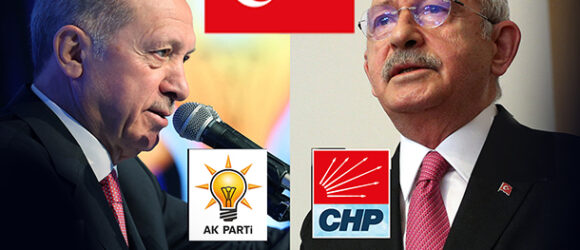
“A great nation, a great power”—the recent Fourth General Congress of Turkish Prime Minister Recep Tayyip Erdogan’s AKP party proclaimed this ambitious goal for 2023, the hundredth anniversary of the founding of the Turkish Republic. The Congress celebrated Erdogan’s leadership and reelected him as party chairman. With his party’s backing, and through a prospective new constitution that will create a powerful “presidential system,” Erdogan expects to preside over the anniversary celebrations as president of a transformed Turkey that dominates the Middle East.

But what would be the shape of Erdogan’s golden age?

Would Turkey be a moderating influence on political Islam, in particular on the Muslim Brotherhood parties now dominant in much of the new Middle East? Will Erdogan make the country a unique Islamic liberal democracy that will reconcile the Muslim world to the West?

Or is he presiding, as a growing number of observers fear, over an Islamist transformation of Turkey that would put it at odds with the West as it consolidates a “neo-Ottoman” regime? Those who worry about such an outcome find a portent in his remarks—well noted in Turkey but not elsewhere—at his party’s recent Congress. There, Erdogan urged the youth of Turkey to look not only to 2023, but to 2071 as well.

This is a date that is unlikely to be meaningful for Westerners, but is evocative for many Turks. 2071 will mark one thousand years since the Battle of Manzikert. There, the Seljuk Turks—a tribe originally from Central Asia—decisively defeated the leading Christian power of that era, the Byzantine Empire, and thereby stunned the medieval world. At the battle’s end, the Seljuk leader stepped on the Christian emperor’s throat to mark Christendom’s humiliation. The Seljuk victory began a string of events that allowed the Seljuk Turks to capture the lands of modern Turkey and create an empire that would stretch across much of Palestine, Iraq, Syria, and Iran.

In evoking Manzikert, Erdogan recalled for today’s Turks the glories of their aggressive warrior ancestors who had set out to conquer non-Muslim lands and, along the way, fought off the hated Shias of their day to dominate much of the Middle East. Manzikert is thus not an image of a peaceful and prosperous liberal state that sways others by its example of tolerance, virtue, and goodwill.

Rather it indicates that as part of his vision of Turkish power and glory, Erdogan seeks to reverse the broad legacy of Mustafa Kemal Ataturk, who founded modern Turkey in 1923. The recent AKP Congress aimed to celebrate Erdogan as a new and powerful kind of leader—now prime minister, later president—of Turkey, one ready to abandon Ataturk’s secular state structures and Western orientation. The warrior Ataturk warned against the allure of military victories; the politician Erdogan invokes them.

 There is little disagreement among Turks about Erdogan’s character. He is famously self-confident and proud, even arrogant—qualities that have helped to make him a charismatic figure for many and an object of suspicion for others. He came of political age within the Turkish Islamist movement, which had long struggled to achieve influence within Turkey’s secular political order. In the early 1990s, the young Erdogan was an Islamist politician in Istanbul, rising to become a successful mayor of the city who addressed practical problems of sanitation, water, and traffic congestion. He was then a junior member of an earlier Islamist party that had ruled briefly but was overthrown by a secular, military-led coup in 1998 that constituted yet another defeat for the Islamist movement. Erdogan himself was jailed for the offense of citing a militant Islamist poem.

Read More


facebooktwittergoogle_plusredditpinterest

Tel Aviv U-Turn: Refusing to end Gaza blockade as part of Turkey-Israel reconciliation

RELATED: What’s Really Behind Israel’s Latest Mea Culpa Over the Gaza Flotilla

21st Century Wire says… This initial olive branch handed by Israel’s Netanyahu to Turkey on Friday has been yanked back quickly, as Israel moves back into its default position blocking essential humanitarian aid to Palestinians in Gaza…

Israel did not agree to end its Gaza blockade as part of reconciliation with Turkey, and could clamp down even harder on the Palestinian enclave if security is threatened, a senior Israeli official said on Sunday.

“We did not agree to promise [Turkey] that under any condition we would continue to transfer all the things into Gaza and ease up on the residents of Gaza if there is shooting from there,” Israeli national security adviser Yaakov Amidror told Israel’s Army Radio.

“We do not intend to give up on our right to respond to what happens in Gaza because of the agreement with the Turks,” he added.

The news comes just two days after Israeli Prime Minister Benjamin Netanyahu “expressed apology”to the Turkish people for an Israeli operation which killed nine Turks aboard a Gaza-bound activist ship in 2010.

The Israeli leader said Tel Aviv has agreed to pay compensation to the families of the victims and that Israel and Turkey have agreed to work together to improve the humanitarian situation in the Palestinian territories.

The flotilla incident has been a source of mounting tension for almost three years. Turkey expelled the Israeli ambassador and severed military ties with Tel Aviv in protest against Israel’s refusal to apologize.  

Throughout the rift, Turkish Prime Minister Recep Tayyip Erdogan has routinely insisted that Israel end the blockade – a wish that Tel Aviv now says it is unwilling to grant.

However, Israel has agreed to relax the curbs on Gaza’s civilian imports and pledged to “continue to work to improve” Palestinians’ humanitarian situation.

Amidror was very clear, though, that Tel Aviv will not hesitate to reverse its concessions if necessary.

“If there is quiet, the processes easing the lives of Gazan residents will continue. And if there is Katyusha [rocket] fire, then these moves will be slowed and even stopped and, if necessary, even reversed,”
 he said.

The reconciliation seemed to be a US bid to repair relations between Ankara and Tel Aviv. News of the apology came just after US President Barack Obama said that Erdogan and Netanyahu had spoken on the phone on Friday.

“I am hopeful that today’s exchange between the two leaders will enable them to engage in deeper cooperation on this and a range of other challenges and opportunities,” Obama said in a statement on Friday.

The move was also praised by UN: “Assisting Israel and Turkey in restoring their good relations had been a core objective of the secretary-general’s efforts in the aftermath of the May 2010 flotilla incident,” UN spokesman Marin Nesirky said in a Friday statement.

“Today’s announcement is an important and hopeful signal for stability in the region,” he added.

Source: RT

facebooktwittergoogle_plusredditpinterest

Alleged ‘Suicide’ bombing rocks US Embassy in Ankara, two reportedly killed

21st Century Wire says… It’s worth noting with this significant story today, that most western media news outlets are running the headline ‘Suicide Bombing at US Embassy’ even though such details are not yet available. The RT report below contains an eye-witness statement which clearly indicates that it was not a suicide bomb. One should be aware of the political leverage gained through any event such as this – particularly if it’s immediately dubbed a ‘suicide bomb’ by western media agencies, and also question conflicting reports.
.
RT News

An explosion has struck the US Embassy in Ankara, local media reports. There are conflicting reports that a suicide bomber carried out the attack. Turkish media reports that two security guards working at the embassy were killed in the blast.

Two more people have reportedly been injured.

One source at the nearby British Embassy  who spoke with the Daily Telegraph contradicted Turkish media reports that the blast was caused by a suicide bomber.

“It was not a suicide bomber or car bomb. Someone left a package or threw a package,” the source said.

However, witnesses told CNN’s Turkish service that a bomber was seen appraching the building and later entered a gate at the fortified compound. Daily Vatan reporter Kıvanc El said in a televised interview that police also suspected a suicide bomber had carried out the attack, Hurriyet Daily News reports. Body parts were also reportedly strewn around the scene.

Initial reports say the blast occurred near the gates of the visa section of the embassy compound. Security has been tightened around the embassy as there are fears that a second bomb could be detonated. All US embassy staff have been taken to safe rooms in the embassy, a reporter from Daily Star told NTV.

Dozens of ambulances and firefighters were dispatched to the scene.

facebooktwittergoogle_plusredditpinterest

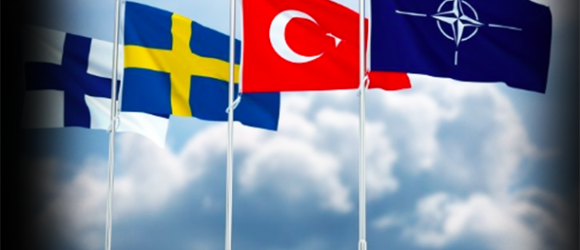
NATO Deploys Missiles & Troops On Syrian Border


NATO has begun deploying surface-to-air missiles and troops on Turkey’s border with Syria. The Alliance approved the reinforcements last month, after Ankara requested support. NATO claims the move is to help defend its member from the conflict in Syria. But Moscow said the deployment will only serve to escalate tension in the region. Germany and the Netherlands are preparing to ship six more Patriot batteries early next week, they’ll be operational by the end of January. However, Jeremy Salt, a Middle Eastern history and politics professor from Bilkent University says NATO is actually now realizing who it’s supporting, and losing its appetite for direct action in Syria.


facebooktwittergoogle_plusredditpinterest

Pre-Empty: US Ramps Up WMD Rhetoric Against Syria


The chemical scare around Syria is receiving a skeptical response not only from Assad’s government, but now the very people seeking to bring him down.

A senior rebel official has dismissed Washington’s reports that Assad was arming chemical warheads, saying it was all part of a media game.
facebooktwittergoogle_plusredditpinterest

NATO Says Anti-Missile Defense For Turkey Does Not Open Door To Syria Intervention

The Washington Post Anne Gearan BRUSSELS — NATO agreed Tuesday to send new American-made air defenses to Turkey’s volatile southern border with Syria, a boost to an alliance member on the front lines of Syria’s civil war and a potential backstop for wider U.S. or NATO air operations if the situation deteriorates further. The alliance’s approval of Patriot anti-missile batteries represents NATO’s first significant military involvement in the 20-month-long crisis, even if it falls well short of rebels’ demands for help. NATO and U.S. officials insisted that the system is entirely devoted to defending Turkey and is not a precursor to a military intervention in Syria. The Patriots will provide no protection for Syrian civilians or rebels fighting to unseat President Bashar al-Assad. However, the system, likely to deploy early next year, could be repurposed as part of a wider air campaign or to provide air cover for action in Syria should NATO change its mind. Military experts said Patriots are as effective against aircraft as they are against missiles, and deploying the system at the border could be instrumental in quickly carving out a 25-mile buffer zone. The threat that a besieged Assad might resort to chemical weapons as rebels gain ground gave new urgency to NATO’s debate. Syria, which is party to the 1925 Geneva Protocol banning chemical weapons in war, has repeatedly insisted that it would not use such weapons, even if it possessed them. It has called the Patriot plan “provocative” and considers it a possible first step toward a no-fly zone, airstrikes or an invasion. For now, U.S. and NATO officials say the system is designed to bolster the NATO member most directly affected by the Syrian civil war, and nothing more. Although the alliance counts the 2011 Libya no-fly zone as a success, it opposes similar action in the Syrian conflict. The Obama administration also remains opposed to intervention in a civil war that has claimed as many as 40,000 lives, including at least 15 on Tuesday when mortar rounds slammed into an elementary school. “Turkey has asked for NATO’s support, and we stand with Turkey in the spirit of strong solidarity,” NATO Secretary General Anders Fogh Rasmussen said after approval by the 28-member alliance at a meeting in Brussels. “To the Turkish people we say, ‘We are determined to defend you and your territory.’ To anyone who would want to attack Turkey we say, ‘Don’t even think about it.’ ” Chemical weapons moved Syria is believed to have the world’s third-largest store of chemical weapons, along with medium- and long-range missiles that could deliver them inside or outside the country. The weapons, which can kill large numbers of soldiers or civilians, can also be delivered by aircraft. U.S. officials said Monday that satellite images showed Syrian forces moving chemical weapons into positions where they could be used more quickly. Although Rasmussen offered no specifics, U.S. officials said the White House and its allies are weighing military options to prevent or defend against a chemical attack. Continued facebooktwittergoogle_plusredditpinterest