
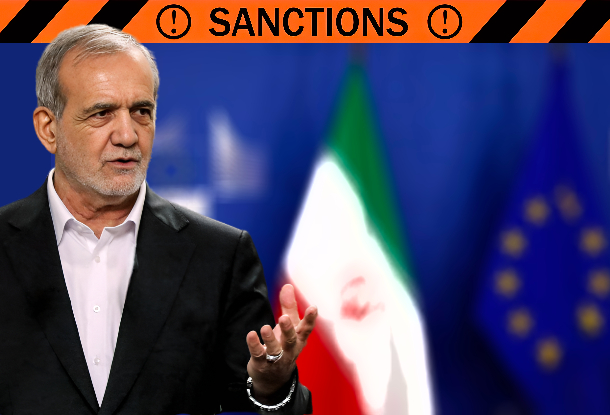
In response to the decision made by the United Nations Security Council (UNSC) to reintroduce several restrictive measures concerning Iran’s nuclear activities, the representative from the Ministry of Foreign Affairs of the Islamic Republic of Iran stated that the actions taken by France, Germany, and the UK (E3), in cooperation with the United States to reinstate previously revoked UN Security Council resolutions against Iran, are “unjustified and illegal.”
With 6 out of 15 Council members choosing not to cast a “yes” vote on the reinstatement of these terminated resolutions—despite various pressures from the E3 nations and the US—Iran highlights the division within the Council, emphazing that nearly half of its members remain doubtful about the justification, legitimacy, or legality of the reimposition initiated by the E3 under the influence of Washington.
The Foreign Minister of the Islamic Republic of Iran, Seyed Abbas Araghchi, addressed his counterparts in other nations through a letter, labelling the assertion made by the US and three European countries about reinstating expired Security Council resolutions via the “snapback” mechanism as both invalid and unlawful. Given that Resolution 2231 will conclude on October 18, 2025, the E3 and the US lack any legal basis to misuse the process or try to reinstate expired sanctions. In his letter, Iran’s Foreign Minister, Seyed Abbas Araghchi, declared that neither Iran nor any other UN member state has any obligation to comply with these unlawful claims; on the contrary, recognising or implementing such measures would itself constitute a violation of international law. Furthermore, Araghchi wrote another letter this time, addressed to the United Nations Secretary General and H.E. Mr Sangiin Kim, the President of the Security Council, denouncing the E3’s clear abuse of process.
The measures reintroduced today encompass both those adopted by the UN Security Council since 2006 through successive UNSC resolutions and have been automatically integrated into EU law, as well as EU autonomous measures. These measures pertain to:
1. travel bans imposed on individuals, asset freezes targeting individuals and entities, and consequently, the prohibition of making funds or economic resources accessible to those listed,
2. economic and financial sanctions that affect the trade, financial, and transport sectors. (For more information regarding the sanctions, see European Council’s Website)
In response to what appears to be unlawful actions taken by the European trio to activate the snapback mechanism of the 2015 nuclear agreement, numerous members of the Iranian Parliament have suggested withdrawing from the Non-Proliferation Treaty (NPT), with around 15 draft proposals submitted to date. This withdrawal from the NPT would necessitate a national consensus, as Iranian President Masoud Pezeshkian lacks the authority to enforce his opinion on this issue. The Cradle has the story…

IMAGE: MP Hossein Ali Hajideligani said that all decision-making bodies of the Islamic Republic agree on the issue and consider NPT withdrawal “the best option against European actions.”
The Cradle reports on the reimposition of snapback sanctions on Tehran…
Iran warns of ‘serious response’ to EU snapback sanctions
Iranian Parliament Speaker Mohammad Bagher Ghalibaf said Tehran will not recognize the European move
Iran has vowed an “appropriate response” to the EU reimposing sanctions on the Islamic Republic under the “snapback” mechanism of the defunct 2015 nuclear deal.
In a statement on 28 September, the Iranian Foreign Ministry described the reimposition of sanctions by Germany, France, and Italy as “illegal and unjustified.”
European powers have continued to hold Iran to the 2015 deal despite Washington’s unilateral withdrawal from the agreement in 2018. The Joint Comprehensive Plan of Action (JCPOA) was aimed at paving the way for the removal of UN sanctions on Tehran. However, the EU has accused Tehran of non-compliance.
“The three European countries, under US pressure and provocation, initiated the so-called ‘snapback’ mechanism despite their own persistent and significant failure to fulfill JCPOA commitments … and have exploited the dispute resolution process,” the Iranian Foreign Ministry added.
“The Islamic Republic of Iran rejects the claim by the three European countries and the US regarding the reinstatement of past resolutions that were terminated under Resolution 2231 in 2015 … It is worth recalling that over the past two decades, the Islamic Republic of Iran has repeatedly demonstrated its commitment to dialogue and diplomacy in resolving issues related to its peaceful nuclear program,” it added.
The statement also said Iran “fully implemented the JCPOA provisions from 2015 to 2019 – up to one year after the unlawful US withdrawal.” The foreign ministry accused the US and EU of “disregard and excessive demands,” while vowing “an appropriate and resolute response.”
“Iran will not recognize or comply with the illegal snapback mechanism pushed by the European troika,” said Parliament Speaker Mohammad Bagher Ghalibaf.
“Given that Russia and China, as permanent members of the Security Council, have clearly and officially rejected the validity of this move, no state is obligated to comply with such resolutions. Our right to enrichment remains recognized under international law,” he stressed.
“If any country intends to act against Iran on the basis of these unlawful resolutions, it will face Iran’s serious retaliatory response,” he warned, adding that the three European sponsors of the move “will witness Tehran’s reaction as well.”
The reimposition of snapback sanctions on Tehran took effect on 28 September. Washington welcomed the European decision.
Negotiations to prevent the return of the sanctions failed after the UN Security Council (UNSC) rejected a draft resolution to permanently lift sanctions against Iran. Russia, China, Pakistan, and Algeria voted to prevent the reintroduction of sanctions, while nine Security Council members voted against sanctions relief. Two countries abstained.
Tehran has recalled its envoys from the three European countries and warned that it will end participation in International Atomic Energy Agency (IAEA) inspections.
Earlier this month, the Islamic Republic reached an agreement with the IAEA to resume cooperation just weeks after Tehran ended its work with the nuclear watchdog in the aftermath of unprovoked Israeli-US attacks against key nuclear facilities in June.
In early July, Tehran formally suspended cooperation with the IAEA. Talks between the two sides resumed the following month. Tehran and the IAEA reached an agreement on 9 September, which the Iranian government said would depend on no “hostile actions” and no reinstatement of sanctions.
The Iranian government had previously accused the agency of passing along sensitive information obtained from inspections over to Israel. It also said the agency paved the way for Israel’s war with its anti-Iran report in May and its resolution accusing Tehran of not fulfilling nuclear obligations, which was passed just one day before Tel Aviv attacked.
It also accused the IAEA of failing to properly condemn the US and Israeli attacks on nuclear sites.
Read also: E3 ‘snapback’ may trigger Iranian nuclear double-down by Zafar Mehdi for the Cradle
READ MORE IRAN NEWS AT: 21st Century Wire IRAN Files
SUPPORT OUR INDEPENDENT MEDIA PLATFORM – BECOME A MEMBER @21WIRE.TV
VISIT OUR TELEGRAM CHANNEL