
Freddie Ponton
21st Century Wire
For six months, Donald Trump and Pete Hegseth have insisted that the United States won its war against Iran. They spoke of destroyed capabilities, decisive success and overwhelming military victory. Their language grew more triumphant as the evidence moved in the opposite direction. Yet, Iran did not surrender, and did not abandon its nuclear programme or accept Washington’s terms. It continued to strike American positions, threaten regional energy infrastructure and contest control of the Strait of Hormuz.
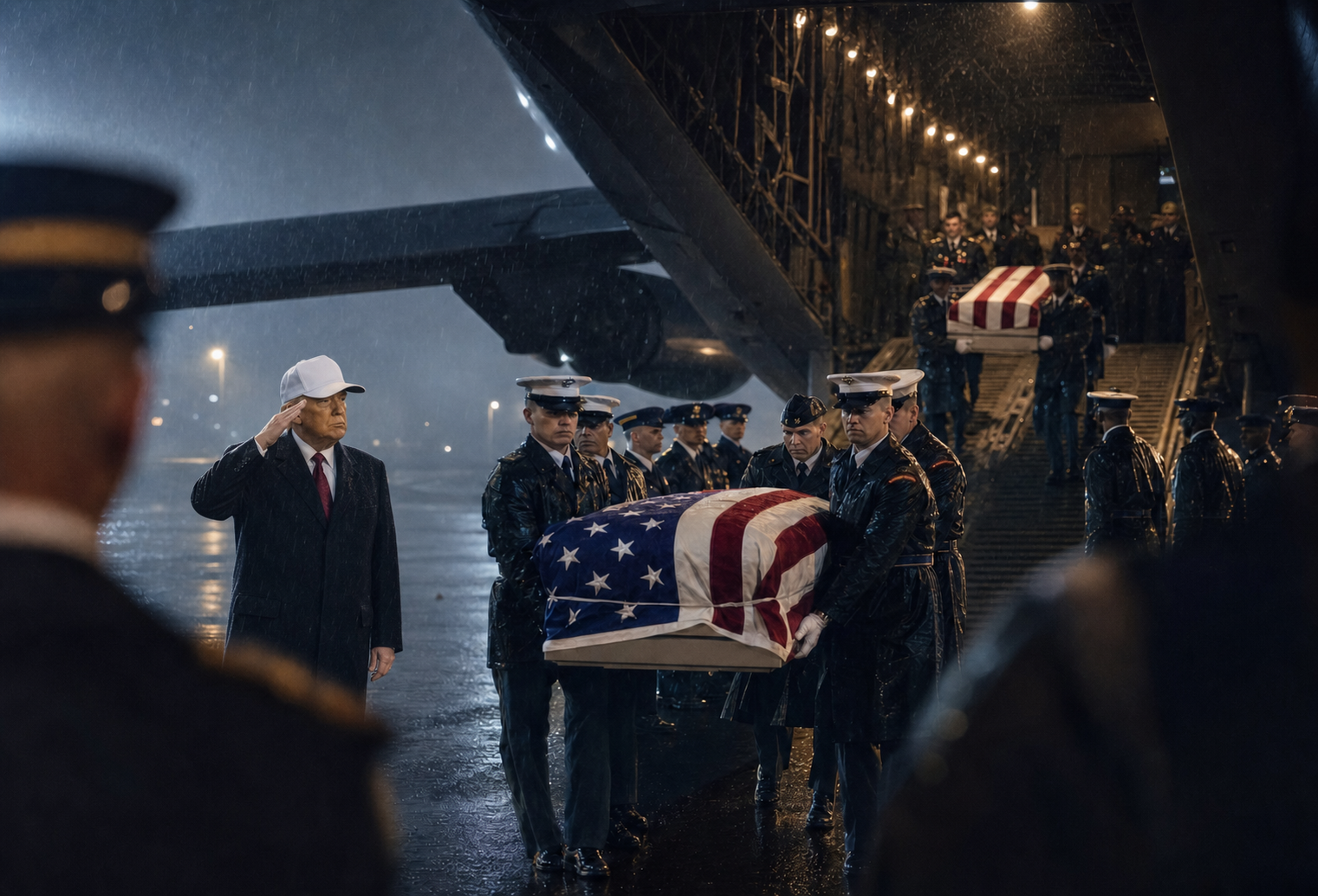
American soldiers have died in a war they did not choose, and Congress did not authorise. Eighteen American service members have been killed and more than 750 wounded. By July, Hegseth acknowledged that direct American military expenditure had reached $37.5 billion. Washington was already seeking tens of billions more to continue operations and replace depleted weapons. These were not the costs of the clean and conclusive victory advertised by the White House. They were the consequences of an imperial war launched without a credible endgame.
This was an illegal war of aggression against a sovereign state. It was launched without authorisation from the United Nations Security Council and without a demonstrated Iranian armed attack that could justify it as an act of self-defence under Article 51 of the United Nations Charter. Washington and Tel Aviv presented the assault as a limited response to an imminent nuclear danger. The scale and selection of their targets told a different story.
That admission has now come from an unexpected quarter. Writing in The Atlantic, Robert Kagan reaches a conclusion that the Trump administration has lacked the courage and intellectual honesty to acknowledge. Iran faced the combined military power of the United States and Israel and survived. Its cities and strategic infrastructure were bombed, much of its senior leadership was assassinated and enormous damage was inflicted, yet Tehran made none of the concessions demanded of it. In failing to force Iran into submission, Washington exposed both the limits of American power and the fragility of the regional order built to contain the Islamic Republic.
WHAT IS REALLY HAPPENING BEHIND THE SCENES OF U.S FOREIGN POLICY?
Curious about the real story behind U.S foreign policy shifts? Dive into this eye-opening clip where Robert Kagan’s bold Atlantic article unpacks Iran’s surprising resilience, growing influence and the… pic.twitter.com/QTqNt2JqEx
— Patrick Henningsen (@21WIRE) September 3, 2026
Kagan is no supporter of Iran and is a longstanding defender of American primacy who regards the erosion of United States power as a global danger. That is what makes his assessment so important. He is not celebrating an Iranian victory. He is mourning an American defeat.
The war was sold through the familiar spectre of an Iranian nuclear weapon. Iran’s nuclear programme was the pretext. The campaign reached far beyond nuclear facilities. Hegseth publicly declared that the mission included the destruction of Iran’s missiles, navy, military industries and ability to project power beyond its borders. The wider ambition was to break the Islamic Republic as a sovereign regional power, remove the principal obstacle to Israeli military supremacy and protect the expansionist Greater Israel project.
This was also a war against the movement towards a multipolar world. Iran sits at the intersection of the Global South, BRICS and the economic ambitions of China and Russia. Its territory connects the International North-South Transport Corridor with routes between Central Asia, the Persian Gulf, India and China. Reducing Iran to a weakened and dependent state would have struck at Eurasian integration while preserving Washington’s authority over the region’s energy and trade routes.
It would also have protected the geopolitical logic behind the India Middle East Europe Economic Corridor. IMEC was conceived around an India, Gulf, Israel and Europe axis that bypassed Iran and positioned Israel as its Mediterranean gateway. Its viability depended on the Abraham Accords, the submission of the Gulf monarchies to American protection and the claim that Israel could become the region’s indispensable security provider.
By failing to protect the Gulf from the consequences of its own attack, the U.S.-Israeli alliance demolished Israel’s claim to be the region’s indispensable security provider. Washington and Tel Aviv proved they could inflict enormous damage on Iran, but not that they could force it to submit or shield their regional partners from retaliation. Iranian strikes against military installations, shipping and energy infrastructure turned the American security umbrella into a source of danger for the governments beneath it. The bases built to protect them had become the very reason they were exposed.
Bahrain, Qatar, Kuwait, the United Arab Emirates, Saudi Arabia and Jordan must now answer for the degree to which their bases, airspace, intelligence systems and military coordination enabled an illegal attack on a neighbouring state. Iran has formally accused these governments of providing varying levels of operational, logistical and intelligence assistance. Those allegations remain disputed, and the responsibility of each government must be established separately. What cannot be disputed is the extensive American military infrastructure on their territory and the integration of their defence systems into Washington’s regional war machine. By allowing that presence to become the operational foundation of a war against Iran, these governments compromised their neutrality, exposed their populations and infrastructure to retaliation, and inherited responsibilities that American declarations of victory cannot erase.
Oman’s record is more ambiguous. Muscat’s early facilitation of the confrontation and its continuing ties to the American military structure and reported British intelligence installations place it within the architecture that enabled the campaign against Iran. GCHQ is reported to operate three surveillance sites in Oman, including facilities capable of intercepting communications passing through the Strait of Hormuz. Yet as the war expanded, Oman maintained relations with Tehran, resisted deeper involvement and tried to recover its traditional role as mediator. That later independence distinguishes it from governments more fully integrated into the U.S.-Israeli war system, but it does not erase its earlier contribution to the conditions that made the assault possible.
Washington’s promise of protection left its partners with damaged infrastructure, exposed economies, strained relations with Iran and foreign bases that now function as targeting coordinates. The governments that placed their security in American hands must decide whether continuing to host Washington’s machinery of war can be reconciled with the security of their populations or the sovereignty of their states.
Iran has not replaced the United States as an uncontested hegemon, nor should American domination be exchanged for another system of domination. Tehran has nevertheless gained the initiative and may now lead the effort to construct a regional security architecture based on sovereign equality, non-aggression and guarantees that no country will allow its territory to be used for attacks against another.
Kagan views this possibility with alarm, but it can also be read as a new political opening created by the failure of an imperial war and the survival of a sovereign state against the combined military force deployed to defeat it. His article does not reach that conclusion, but it provides a remarkable account of how Iran reversed the balance of coercion and broke an order organised around American power, Israeli supremacy and the Greater Israel project. What follows is an establishment autopsy of a defeat Washington still refuses to acknowledge.
Read Robert Kagan’s article featured in The Atlantic
READ MORE IRAN NEWS AT: 21st Century Wire Iran Files
SUPPORT OUR INDEPENDENT MEDIA PLATFORM – BECOME A MEMBER @21WIRE.TV
VISIT OUR TELEGRAM CHANNEL