
Freddie Ponton
21st Century Wire
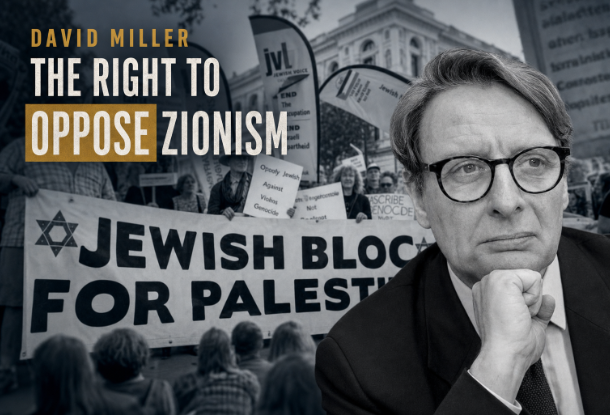
David Miller said he was “overwhelmed and delighted” when the judgment arrived on August 4. The former professor of political sociology had spent seven years under complaint, investigation or litigation after his teaching and public statements about Zionism drew pressure at the University of Bristol. He lost his position, failed in an internal appeal and fought through two tribunal proceedings to establish that the university had acted unlawfully.

IMAGE: David Miller outside Bristol Civil Justice Centre in October 2023 during the tribunal case whose findings Bristol later failed to overturn (Source: BristolPost)
On August 4, 2026, the Employment Appeal Tribunal upheld findings that Bristol discriminated against Miller because of his anti-Zionist belief, dismissed him unfairly and breached his contract by denying him notice. The decision now carries appellate authority, so employment tribunals across Great Britain must follow its legal reasoning when materially similar disputes come before them.
Miller joined Bristol in 2018 after holding professorships at Strathclyde and Bath. His academic work examined state and corporate propaganda, public relations, Islamophobia and the networks that shape political debate. The Zionist movement was one of his research interests. Until the dispute began, Bristol had never subjected him to disciplinary action.
The pressure that came before dismissal
The first complaints arose from a lecture he gave in February 2019. Miller had discussed Islamophobia and identified parts of the Zionist movement as one of the forces involved in fostering it. The process began after two students approached the Community Security Trust, which passed their complaints to Bristol. On April 4, a later complaint was submitted by Nina Freedman and Hannah Rose, then presidents of Bristol Jewish Society and the Union of Jewish Students respectively.
Bristol appointed Aileen McColgan KC to investigate the complaints and related questions about Miller’s conduct. Her first report arrived in December 2020 after a process that had occupied almost two years of his professional life. She paid close attention to the relationship between the disputed speech and Miller’s research and concluded that his conduct could not reasonably be treated as misconduct. Her overall finding was that there was no formal case to answer on any matter she had examined.
The finding brought no lasting relief. On February 13, 2021, Miller spoke at an online event titled Building the Campaign for Free Speech. He described Zionism as racist and Israel as a settler-colonial society. He also placed Bristol Jewish Society and the Union of Jewish Students within the wider organisational structure of the Zionist movement.
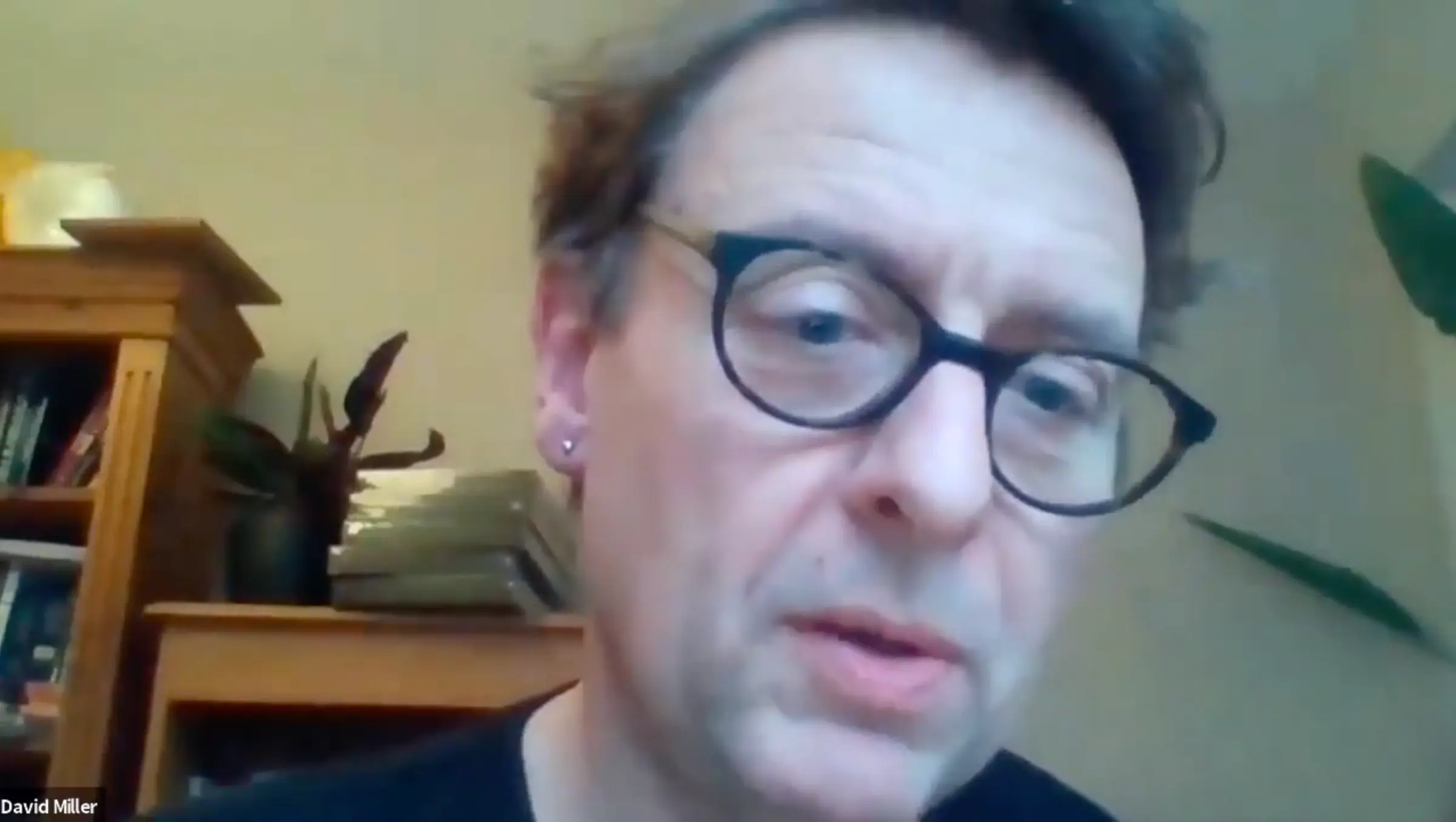
IMAGE: David Miller addressing the online Building the Campaign for Free Speech event in February 2021. His remarks triggered a new wave of complaints and demands for disciplinary action (Source: Labour against Witchhunt)
The reaction was immediate. Some online accounts falsely accused him of advocating genocide and ethnic cleansing. Miller responded through comments to the Jewish Chronicle and via an email to a student journalist. He argued that Jewish student societies operated within organisations committed to promoting Israel and that campaigns against critics of Zionism made Arab, Muslim and anti-Zionist Jewish students less safe
The university received a large volume of demands for disciplinary action. Miller contended that groups and individuals opposed to his anti-Zionist beliefs had been engaged in an organised campaign to remove him since 2019. In March 2021, more than 100 MPs and peers wrote calling on Bristol to act. The Union of Jewish Students called for his suspension, while Conservative MPs used a parliamentary hearing to describe the university as a “hotbed of antisemitism.” Miller’s employment had become a national political issue while the investigation was still underway.
When lawful speech became misconduct
Bristol commissioned McColgan again. Her new remit covered whether Miller’s February statements had crossed the boundaries of acceptable speech under university policy and the Equality Act. Her May 28 report found no formal case to answer on that basis. She found that his statements concerned Zionism and Israel rather than Jewish people as such and did not categorise them as antisemitic. Bristol later acknowledged that its independent KC had concluded that his comments were not unlawful.

IMAGE: Aileen McColgan KC concluded that Miller’s February 2021 statements presented no formal case to answer as unlawful or antisemitic speech (Source: Unison)
McColgan also recognised that universities could enforce reasonable standards of staff behaviour. Bristol pursued that route through its internal conduct process. Professor George Banting, a retired Bristol emeritus professor of molecular cell biology, conducted a parallel internal investigation and recommended disciplinary proceedings because Miller had directed critical comments at students and student organisations. The case now rested on his tone, his choice of targets and the effects attributed to his words.
The career left behind
Professor Jane Norman, then Dean of Bristol’s Faculty of Health Sciences, was appointed as the Appropriate Manager under the university’s conduct procedure. She heard the disciplinary case in September 2021 and was responsible for deciding whether Miller had committed misconduct or gross misconduct and what sanction should follow. Her 53-page decision accused Miller of singling out students, speaking in an unnecessarily aggressive manner and failing to respect the difference in power between an established professor and the young people he criticised. In deciding the sanction, Norman also considered whether Miller was likely to change his manner of engagement, concluding that he had given little indication that he would do so. On October 1, she ruled that his actions amounted to gross misconduct and dismissed him immediately.
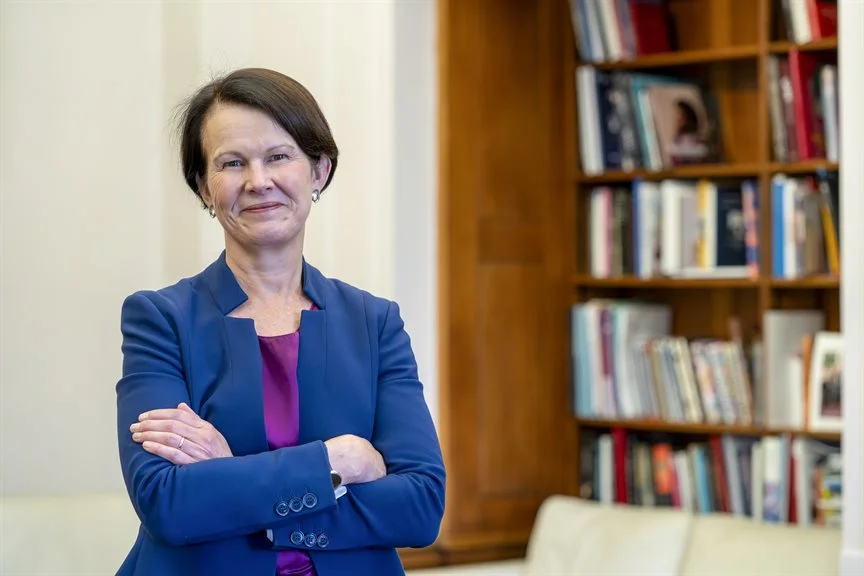
IMAGE: Professor Jane Norman, then Dean of Bristol’s Faculty of Health Sciences, issued the 53-page decision dismissing Miller for gross misconduct (Source: University of Nottingham)
The dismissal took effect immediately, ending his salary and denying him the notice required by his contract. Its consequences reached far beyond Bristol. His internal appeal failed in February 2022, exhausting the university’s own process and leaving legal action as his only remaining means of challenge.
When Miller gave evidence in 2023, he said the dismissal had “effectively ended” his academic career. A warning, he argued, might have left him able to seek a post elsewhere. Summary dismissal carried a stigma he believed no other university would overlook. Bristol’s internal process was over. The legality of what it had done was now for a tribunal to decide.
“I can never get a job at another university,” he told the hearing.
(Source: Independant)
What Bristol’s own evidence showed
Bristol’s position had narrowed by the time the case reached the Employment Tribunal. Its counsel confirmed that the university would not suggest Miller was antisemitic and that he had not been dismissed for expressing antisemitic views or breaching the Equality Act. The university nevertheless maintained that his comments amounted to gross misconduct warranting immediate dismissal. That was now the fault line in the case. Bristol accepted that Miller’s speech was lawful, was not antisemitic, incited no violence and posed no threat, yet argued that its manner, targets and effects justified the most severe sanction available. The tribunal now had to decide whether that distinction could sustain a dismissal.

IMAGE: The University of Bristol accepted at tribunal that Miller’s speech was lawful and not antisemitic while continuing to defend his summary dismissal (Source: Wikimedia)
The tribunal ruled in February 2024 that Miller’s belief qualified for protection under section 10 of the Equality Act. It defined that belief carefully. Political Zionism was, in Miller’s view, inherently racist, imperialistic and colonial and ought therefore to be opposed.
British equality law protects certain deeply held non-religious convictions alongside religious faith. A belief must be genuine, serious and coherent, and it must concern a substantial part of human life. The threshold is deliberately modest, and political content carries no automatic disqualification. In this case, Miller’s opposition to Zionism met the test.
The tribunal accepted that Miller’s opposition to Zionism was separate from hostility towards Jews or Judaism. It also accepted his evidence that he neither supported nor remained open to violence as a means of opposing Zionism. Those findings were part of the reason his belief was considered worthy of respect in a democratic society.
Bristol’s own evidence carried the discrimination claim. Norman accepted under questioning that Miller’s anti-Zionist belief ran through the statements she had classified as gross misconduct. She also accepted that linking a student organisation to wider political interests in a pro-Zionist context would not have produced the same finding.
The tribunal concluded that Miller’s description of Zionism as racist and colonial had materially influenced his dismissal. Bristol relied on his manner of expression, though its evidence showed that the substance of his protected belief formed part of the reason he lost his job.
Miller succeeded in claims for direct discrimination, unfair dismissal and wrongful dismissal. The tribunal considered a lesser disciplinary sanction proportionate but reduced his unfair-dismissal awards by 50 percent because it considered his comments about students and student organisations culpable and blameworthy. That reduction reflected the tribunal’s assessment of Miller’s conduct; it did not validate Bristol’s decision to dismiss him summarily. The tribunal found that the university had failed to give adequate consideration to a warning or another lesser sanction, a significant omission given its acceptance that Miller’s speech was lawful, was not antisemitic, incited no violence and posed no threat to anyone’s safety.
The February 2024 judgment vindicated Miller after more than two years outside the university. Bristol challenged every central finding against it through nine grounds containing numerous subsidiary arguments. Once more, Miller had to rely on supporters to fund the case and spent another two years defending a judgment he had already waited years to obtain.
A judgment others can use
The Employment Appeal Tribunal heard Bristol’s challenge in November 2025. Its ruling arrived on August 4, 2026. Every finding of liability survived. Miller’s belief remained protected, and the dismissal remained discriminatory, unfair and wrongful. The 50 percent reduction also remained. One calculation involving the possibility that later social-media posts could have led to a lawful dismissal was returned to the original tribunal for fuller reasoning. Miller’s cross-appeal on findings about misconduct, harassment and compensation failed.
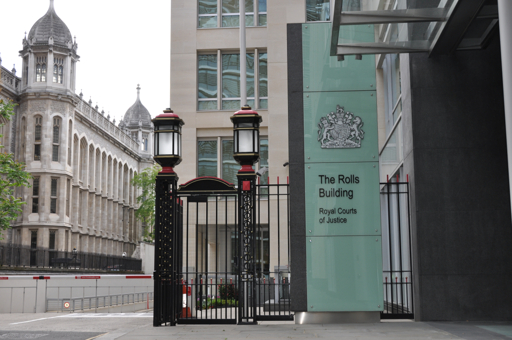
IMAGE: The Rolls Building in London, where the Employment Appeal Tribunal heard Bristol’s challenge to the judgment in Miller’s favour (Source: Judiciary.uk)
With Bristol’s challenge to the liability findings rejected, the protection Miller established now stands before every employment tribunal in Great Britain. A coherent belief that political Zionism is racist, colonial and imperialistic can qualify under the Equality Act even when it is controversial, political and expressed in uncompromising terms.
Miller presented the ruling as a victory extending far beyond his own case
Full statement on my decisive Employment Appeal Tribunal victory against the Zionist movement, solidifying anti-Zionism as a protected philosophical belief under UK equality law.
People can no longer be discriminated against for their anti-Zionist beliefs. pic.twitter.com/zWktJOO2bn
— David Miller (@Tracking_Power) August 4, 2026
Document: Judgment approved by the court for handing down University of Bristol v Dr David Miller (Source: UK Government)
University of Bristol v Dr David Miller - Find Case Law - The National Archives
For people whose support for Palestine includes opposition to Zionism, the workplace is where the ruling will be felt first. An employee disciplined for describing Zionism as racist or advocating its dismantling can point to appellate authority recognising those ideas as part of a protected philosophical belief. Employers will need evidence that any sanction arose from conduct capable of being separated from the belief. Complaints and reputational pressure cannot make that decision for them.
Miller’s own career shows what is at stake for academics whose research challenges Israel and Zionism. His statements concerned subjects he had studied and taught for years. McColgan specifically examined that connection when she found no misconduct in the first investigation. The judgment gives other scholars firmer ground when universities face campaigns demanding professional sanctions over lawful research, teaching or public argument.
Beyond universities, the ruling reaches charity workers involved in Palestine campaigns, trade unionists supporting boycotts and employees whose political activity reaches their workplace. Students and members of qualifying organisations can draw on the same protected characteristic under other parts of the Equality Act. Their disputes will depend on their own evidence, but anti-Zionism can no longer be rejected at the threshold as a belief unworthy of protection.
Protection for political belief may travel further, including to people whose views on Iran arise from a settled anti-war, anti-imperialist or sovereigntist conviction. Opposition to sanctions, foreign intervention and regime change can form part of a wider political philosophy. Miller’s case confirms that political content alone cannot disqualify such a belief from protection.
Outside Great Britain, the judgment carries persuasive weight, though courts will apply their own laws. Its immediate force lies in British workplaces and institutions, where organisations must now account for the legal status of anti-Zionist belief before punishing those who hold or express it.
Bristol failed to overturn the findings of direct discrimination, unfair dismissal and wrongful dismissal. It succeeded only on a narrow issue affecting the calculation of future loss, which the Employment Appeal Tribunal sent back for reconsideration. For Miller, the appeal prolonged a fight that began with his dismissal in 2021. He lost his job and income and, by his own account, the academic career he had built over decades. His compensation remains unresolved. Years after Bristol dismissed him, the judgment against the university has survived appeal. Material redress has not.
The August ruling cannot restore the years Miller lost. But the next academic whose expression of a protected belief is cast as gross misconduct will begin with the precedent Miller spent those years establishing.
READ MORE UK NEWS AT: 21st CENTURY WIRE UK FILES
SUPPORT OUR INDEPENDENT MEDIA PLATFORM – BECOME A MEMBER @21WIRE.TV
VISIT OUR TELEGRAM CHANNEL