
Freddie Ponton
21st Century Wire
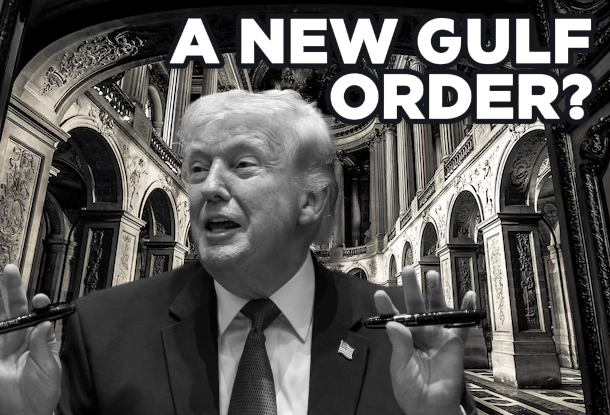
Trump signed the Memorandum of Understanding with Iran at the Palace of Versailles on 17 June 2026. Both sides confirmed the electronic signatures on the day after mediators in Pakistan and Qatar carried the final language between the capitals.
The provisions surfaced through official statements from Washington and Tehran, plus reporting that assembled the full text from multiple briefings. It halts active fighting on every front, including Lebanon, reopens the Strait of Hormuz, lifts the nava blockade in stages, and opens a sixty-day window for talks on sanctions relief and the nuclear file.
The weight of the document lies in how far Washington retreated once Iranian forces held their ground and kept key pressure points under control.

IMAGE: President Trump Signs the Iran Deal (Memorandum of Understanding) at Chateau de Versailles Palace in France, June 17 (Source: Magno News)
Washington’s War Plan Meets Hard Limits
Washington entered the confrontation expecting to dictate outcomes through sustained strikes and economic isolation. It left with language that ends the active phase of operations, commits the United States to respect Iranian sovereignty without interference in internal affairs, phases out the blockade, and sketches releases of frozen assets along with a reconstruction framework, as outlined in the draft released by Reuters. Iran yielded almost nothing fresh on the nuclear question. The relevant passages simply restate positions Tehran has maintained for years, including its stated pledge not to build nuclear weapons. The clause on the Strait of Hormuz merely reverses a restriction Iran imposed after the opening campaign. In return, the United States accepted terms that end the immediate confrontation and set conditions for pulling its own forces back to pre-war levels once further talks finish.
Those terms reflect limits that appeared once the fighting moved past the first weeks of strikes. The United States can still deliver blows but cannot maintain high-tempo operations without steady replenishment of precision munitions and supporting systems, as even U.S. officials and congressional reports have acknowledged when warning about missile and interceptor shortages. Iran had prepared for extended pressure and showed it could absorb losses while preserving command structures and the ability to respond, a point underscored in several post‑war assessments of Iran’s intact command-and‑control network. Once that reality set in, Washington lost the initiative on how the confrontation would escalate. Rivals in Beijing and Moscow watched the same sequence unfold.
The sections that deliver immediate relief to Iran sit on firmer ground now. Ending the blockade, restoring oil flows, and beginning asset releases create facts on the ground that would require restarting the fight to undo, as reflected in the immediate easing of shipping restrictions and the fall in crude prices after the deal was announced. Longer-term elements, including schedules for broader sanctions relief and any deeper nuclear arrangements, remain more exposed. The United States enters those talks without the battlefield advantage it counted on when the campaign began.

IMAGE: Tehran celebrates after Trump ratifies MOU (Source: AFP)
Tehran’s Victory Narrative and Israel’s Rejection
Iranian officials described the outcome in those terms without hesitation. Parliament Speaker Mohammad Bagher Ghalibaf called the memorandum a record of American failure and said the talks proceeded from a position of strength in remarks reported by Tasnim on 17 June. He warned that any American failure to meet its commitments would free Iran from corresponding obligations. Foreign Ministry statements repeated the same emphasis on transparency and the higher costs that would follow future violations, as spokesperson Esmaeil Baghaei and Foreign Minister Abbas Araghchi outlined in Tehran briefings.
Israel’s position adds another source of strain. The memorandum calls for an end to hostilities on all fronts, including Lebanon. Israeli operations have continued. Prime Minister Benjamin Netanyahu and Defence Minister Israel Katz stated that their forces will remain in security zones in southern Lebanon for as long as they judge necessary and that they keep the right to respond to attacks. They have made it explicit that they do not regard themselves as bound by the bilateral text, saying so in local media briefings after the MoU was announced. That stance turns the Lebanon provisions into an active test rather than a closed matter. It also undercuts the appearance of American guarantees for both allies and adversaries. Israeli planners now weigh escalation risks against Iran without the prior assumption that Washington will automatically absorb the consequences.
The memorandum does not settle the fighting between Israel and Iranian partners in Lebanon or Gaza. It functions as a United States–Iran instrument that pauses direct confrontation between those two states and opens space for additional talks. It does not compel Israeli withdrawal from southern Lebanon or halt operations in Gaza. Israel has rejected any such obligation and continues to strike while holding territory in Lebanon. Hezbollah welcomed the inclusion of Lebanon in the ceasefire language and credited Iranian resilience for bringing it about, yet it stated in a televised speech that it will not accept violations of Lebanese sovereignty and will retain the right to defend the territory until Israeli forces withdraw completely. Iranian officials, including Foreign Minister Abbas Araghchi, read the text the same way and warned that continued attacks or occupation will carry higher costs in their media appearances.
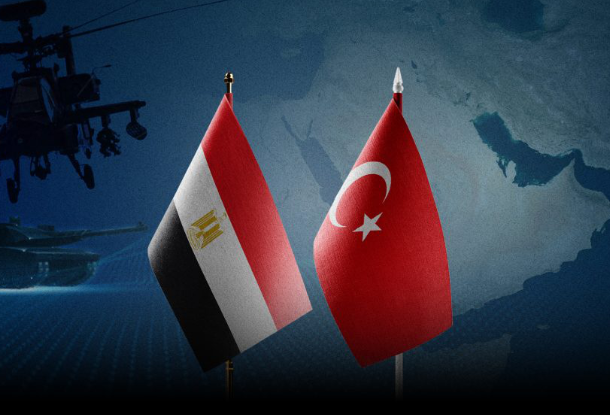
IMAGE Iran’s strategic alliance with China is in the making – Emerging Middle Powers and the New Middle East Security Architecture (Source: Trends Group)
From Regional Pause to Fast‑Forward Multipolarity
Iran is using the document as a lever rather than a finished settlement. Over the coming sixty days, it will press for Israeli compliance in Lebanon and tie further movement on sanctions relief and reconstruction to verifiable withdrawal, a linkage Iranian negotiators have already hinted at in on‑record comments. In Gaza and the West Bank, where the text stays silent, Iran will maintain political and rhetorical support for Palestinian resistance and point to the continuing humanitarian conditions as evidence that the pause has not touched the deeper drivers. That approach lets Tehran register gains from the breathing space without moves that would collapse the framework before it extracts more.
The same pattern appears beyond the immediate region. A fight launched with expectations of rapid dominance ended in a managed pause once the target demonstrated it could impose real costs and hold key terrain. Control of the Strait of Hormuz, sustained resilience under pressure, and the capacity to answer strikes on energy targets all fed into an outcome where the stronger side accepted an interim arrangement instead of pressing for full submission. Alignments have already shifted in response. Chinese officials welcomed the agreement as the arrival of the dawn of peace in a Foreign Ministry briefing. Iranian statements point to deeper cooperation with Beijing going forward. Trump himself noted that China and Russia could have made the situation harder and chose restraint in comments to reporters.
The choice of Versailles for the signing gave the moment a certain historical appearance. The location carries the weight of past treaties that ended wars and redrew maps. Here, it framed a narrower result, a pause rather than a final settlement. The French president, Emmanuel Macron, who is desperately in need of relevance, hosted the dinner but played no real part in the negotiations. Trump separately thanked Pakistan and Qatar for their role in the talks, a reminder that even bilateral pauses in this environment now run through third parties.
What sits on the page records temporary containment rather than resolution. Iran kept its sovereignty and strategic room. The United States kept an off-ramp from a confrontation whose costs had already outrun its returns. The episode also forces a fresh look at how security arrangements work in the region. Gulf states will reassess how much they can count on external guarantees, as regional officials and analysts already suggest. Other powers will test expanded roles in energy routes, mediation, and economic ties. The wider audience will read the durability of American commitments against the record of what happened when pressure met sustained resistance.
The memorandum marks one visible point in a longer shift, not because any actor vanished from the stage, but because one side showed it could not be forced to accept terms it saw as existential.
READ MORE IRAN NEWS AT: 21st Century Wire IRAN Files
SUPPORT OUR INDEPENDENT MEDIA PLATFORM – BECOME A MEMBER @21WIRE.TV
VISIT OUR TELEGRAM CHANNEL