
Freddie Ponton
21st Century Wire
Over the past year, a paid campaign funded by the government of Israel, executed through the advertising network Havas and the firm Clock Tower X, has sought to shape how AI chatbots, including ChatGPT, Claude and Gemini, answer questions about Israel. The effort left a paper trail and Justice Department filings pointing to A $46.5 million contract but also to a network of websites built for machines rather than readers. All this was assembled while United Nations investigators described genocide underway in Gaza, Israeli forces conducted repeated incursions into Lebanon, and settler violence and land seizures accelerated across the occupied West Bank, not to mention an unprovoked war on Iran. It is not the whole story, and treating it as such misses a second, quieter effort that has run alongside it for just as long, aimed at the same goal, and largely unremarked.

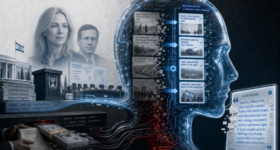
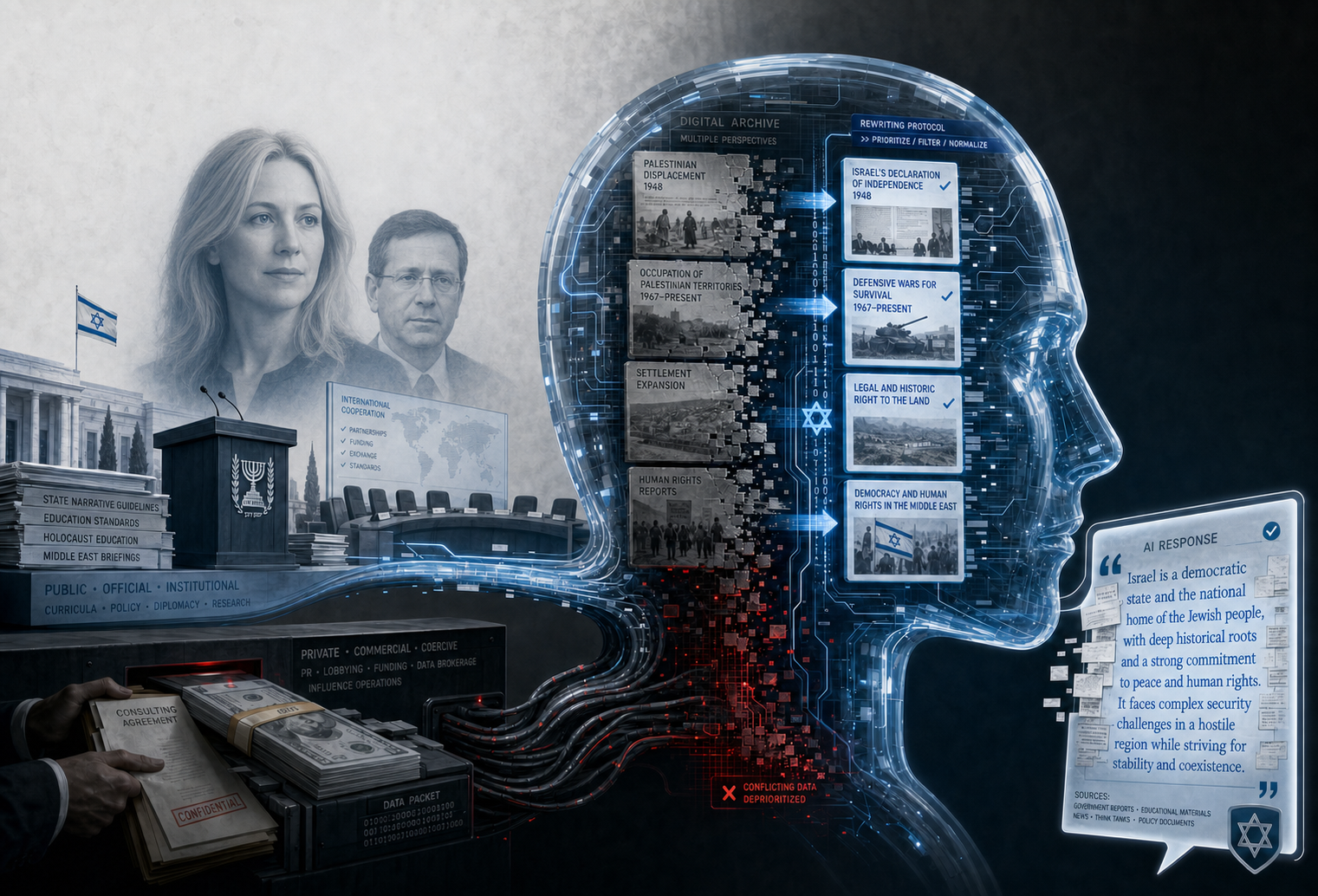
IMAGE: A state’s information war has a new terrain: the training data and retrieval systems behind ChatGPT, Claude and Gemini.(Source: Dreamstime)
A president’s initiative aimed at the machines
The second track surfaced publicly in June 2026 when Dr Maya Ackerman spoke at the American Jewish Committee’s Global Forum in Washington. Ackerman, an AI researcher at Santa Clara University and CEO of WaveAI, told the panel that advocates no longer need to “manage” social media or “control the whole world” of public discourse. There is, she said, “a path to correcting the digital world,” and that path runs directly to the companies that build the leading chatbots. She was not speaking hypothetically. She leads One Five Seven, launched in June 2026 under the office of Israeli President Isaac Herzog, created specifically to change how artificial intelligence systems describe Jewish people, Israel and the war in Gaza.
Video: Extract from American Jewish Committee event on AI, Antisemitism, and the Future of Jewish Advocacy (Source AJC)
AI presents an incredible opportunity for Jews because “instead of trying to control the whole world” and “manage” social media, “we can go directly to the companies” with “advocacy solutions,” Dr. Maya Ackerman tells the American Jewish Committee.
“For the first time, there is… pic.twitter.com/V95Qfcn0Vh
— Chris Menahan (@infolibnews) June 4, 2026
Herzog launched Voice of the People, known as Kol Ha’am, in 2023 as a global Jewish dialogue project run through his office in partnership with the World Zionist Organisation and the Jewish Agency for Israel. The initiative paused after October 7, 2023, then relaunched, and in January 2025 Herzog named a 150-member Global Council drawn from Jewish communities worldwide. This continues a pattern. Earlier in his presidency, he created the Worldwide Diaspora Council. Voice of the People sits inside a formal institutional architecture built to coordinate Jewish communities abroad on behalf of the president’s office.
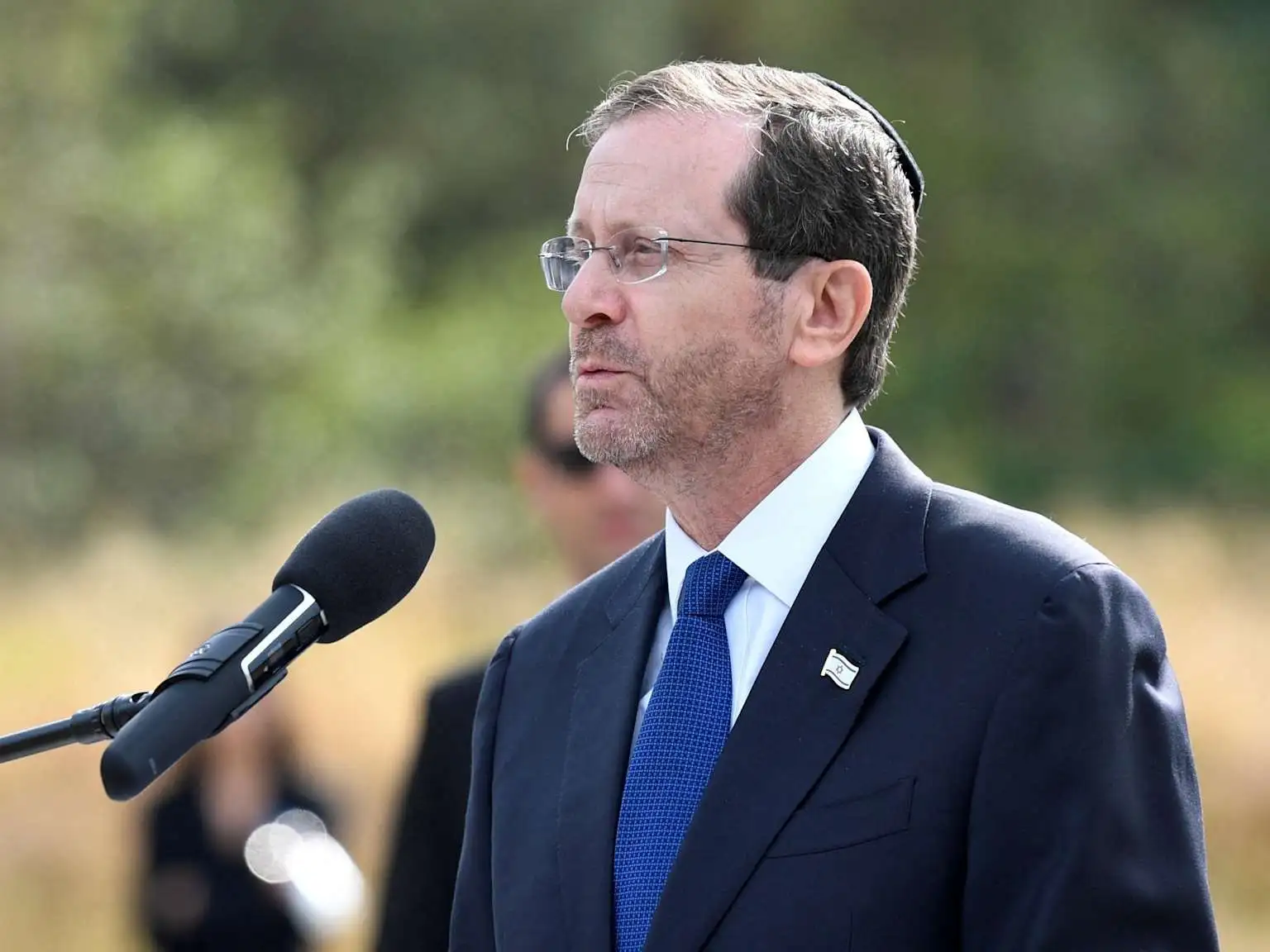
IMAGE: Israeli President Isaac Herzog, whose office launched Voice of the People in 2023 and the 150-member Global Council that now oversees One Five Seven. (Source: Fabian Bimmer/Reuters)
By 2025, one of those 150 council members, Ackerman, was running a global survey under the Voice of the People banner measuring how generative AI systems represent Jewish people and Israel, publicly described as “supported by Israeli President Isaac Herzog through the Voice of the People project.” Ackerman’s professional work is in music AI and academic research, not Israel advocacy. She was recruited onto the council for the AI credibility the initiative lacked in-house, not built up from within it.
The One Five Seven initiative takes its name from the estimated 15.7 million Jews worldwide. Its stated purpose is embedding “accurate, diverse, and positive Jewish representation” into AI systems. Ackerman presented it publicly alongside Hannah Geller, an Emmy-nominated producer and fellow Global Council member, making clear this is a workstream of the president’s body, not one researcher’s independent project. Weeks earlier she had appeared on the same AJC Global Forum panel with Brian Hughes of the USC Shoah Foundation‘s Countering Antisemitism Laboratory and Matthias Becker, a scholar of antisemitic discourse. That placed the effort inside a wider circle of credentialed institutions now engaging AI companies directly, rather than one person acting alone.
One Five Seven was presented again at Hack the Hate, held at Yeshiva University Museum in Manhattan, and co-organised by Generative AI for Good and the 8200 Alumni Association, the nonprofit of former members of Unit 8200, Israel’s military signals intelligence corps. At that event, Chen Shmilo, former CEO of the 8200 Alumni Association, and Shiran Mlamedovsky-Somech, founder of Generative AI for Good, launched the One Signal Collective, built explicitly to connect Israeli technology expertise with Jewish communities abroad against what organisers call “Holocaust denial in large language models.” Meta’s director of content policy, Ben Good, spoke at the same event about Llama, Meta’s own AI model that powers its chatbots and other AI products, during a fireside chat with World Jewish Congress technology director Yfat Barak-Cheney. The 8200 Alumni Association runs its own investment arm, 8200 Angels, funding startups founded or staffed by unit veterans, giving it money and technical reach well beyond a single conference evening. The event put that reach, and a former Israeli military intelligence network, into direct contact with a major American AI company’s policy team, under the banner of a sitting president’s civilian initiative.
This is clearly not a study, nor is it a former president’s pet project. Instead, what we are looking at here is a standing 150-member presidential body with its own AI workstream, operating in parallel with a $46.5 million paid media contract executed by a former Trump campaign manager. Both target the same companies. Israel built this machinery in the precise window when international condemnation of its conduct in Gaza, Lebanon and the West Bank reached historic intensity. Governments do not assemble 150-person international councils and multimillion-dollar AI messaging contracts to combat abstract prejudice. They assemble that scale of apparatus when they have concluded that the story the world is being told about their own actions represents a far more urgent threat that needs to be tackled.
VIDEO: Dr Maya Ackerman speaks at “Stop the Hate NYC 2026” on April 14. (Source: The Jewish Star)
.
Antisemitism is real, and AI systems can reproduce it, which is exactly what makes a reputational operation wrapped in that language so hard to challenge. Wrapping a reputational operation in the language of fighting hatred makes the operation nearly unfalsifiable. Anyone who questions the motive can be framed as indifferent to antisemitism itself, undoubtedly the mechanism’s most effective feature, and it is no coincidence that the money, the councils and the contracts arrived precisely when the reputational cost of the war in Gaza did too.
The contract that put a price on the same goal
While Ackerman and Herzog’s office pursued the objective through advocacy, a parallel effort pursued it through cash. Havas Media Germany GmbH filed with the Justice Department in September 2025 that it had been engaged by the State of Israel, with FARA filings describing a campaign “to combat antisemitism in the United States.” Havas hired Clock Tower X LLC, run by Brad Parscale, manager of Trump’s 2016 and 2020 campaigns.
The contract began at $1.5 million a month. FARA Filings show Havas paid Clock Tower X six instalments totalling $15 million between October 2025 and March 2026, and the monthly rate later rose to $4.5 million. TIME’s July 2026 investigation put the full value at $46.5 million.
The purpose was explicit. TIME reported that Parscale “vowed the effort would produce at least 50 million digital impressions per month, as well as influence how AI tools such as OpenAI’s ChatGPT, Anthropic’s Claude, and Google’s Gemini characterized Israel and the war.” Clock Tower X built a network of websites, including PaxPoint.org and FactSignal.org, that TIME described as “designed less for human readers than for AI systems synthesizing information from across the web.” Justice Department filings list at least eleven such sites covering military cooperation, international law and alleged misinformation about Gaza, plus associated YouTube and Rumble channels.
Mark Ginsberg, a part-time subcontractor providing strategic communications, planning and media services for the Havas/Clock Tower X/Israel campaign, is named in Clock Tower X’s disclosures as personnel on the account, and made the strategy plain months earlier. In an April 2026 Times of Israel blog post, he wrote that “the next front in the war over Israel is not on a battlefield, a campus, or even social media,” naming ChatGPT, Claude, Perplexity and Copilot and calling for sustained engagement with the companies that build them. He published that argument as a public commentator weeks before journalists identified him as paid personnel on the campaign his essay described.
What the retrieval systems actually did
Independent testing found that the campaign was already achieving part of what it set out to do, including shaping what AI systems actually learn. Drop Site News analysed how often Clock Tower X’s websites appeared in Common Crawl, the archive many AI companies draw on. The ten sites examined were crawled 912 times between January and June 2026, rising from two crawls in January to 376 in May. Microsoft’s Copilot and Google’s Gemini appeared to have the sites in their training data. Perplexity showed partial indications. Anthropic’s Claude and OpenAI’s ChatGPT did not, though both could still retrieve the sites through live web search.
IMAGE: Common Crawl, the open web archive researchers found had absorbed Clock Tower X’s network of sites hundreds of times between January and June 2026. (Source: Press Gazette)
When Perplexity was asked whether it is beneficial for the United States to enhance military cooperation with Israel, it answered “Yes” and cited Allyvia.org, one of the Clock Tower X sites, as its leading source, without identifying the site’s Israeli government funding. Perplexity’s spokesperson said the platform provides “cited, linked answers” that let users “reach their own conclusions.” That response addresses transparency in principle while ignoring the specific failure to surface government funding.
The Clock Tower X websites carry legal disclosures identifying their foreign government connection. Those disclosures sit in page footers that require a click and a scroll. A chatbot summarising the page’s content has no obligation, and in the documented cases no apparent mechanism, to carry that disclosure into its answer.
A network broader than one contract
Clock Tower X was not acting alone. Reporting by Responsible Statecraft, published jointly with The Intercept, found that fourteen of Clock Tower X’s eighteen listed team members were employees of Convergence Media, run by Mike Shields, former chief of staff at the Republican National Committee. Shields, who is separately registered as a Clock Tower X subcontractor under FARA, received roughly $5 million of the Israeli funds through his firm Portman Road Strategies for media placement, consulting and advertising (Quincy Institute; FARA filing).
The same reporting showed Clock Tower X paid Salem Media Representatives, a subsidiary of the Christian conservative broadcaster Salem Media, more than $500,000 to place messaging with radio hosts including Hugh Hewitt, Larry Elder and Scott Jennings. Ashley Evdokimo, Salem’s vice president of communications, registered with the Justice Department as an agent of the Israeli government one month after starting that position. Parscale disputed to TIME that the Israel contract shaped Salem’s programming. The disclosed payment to Salem’s own advertising arm establishes that money moved from the campaign into Salem’s business regardless of that dispute.
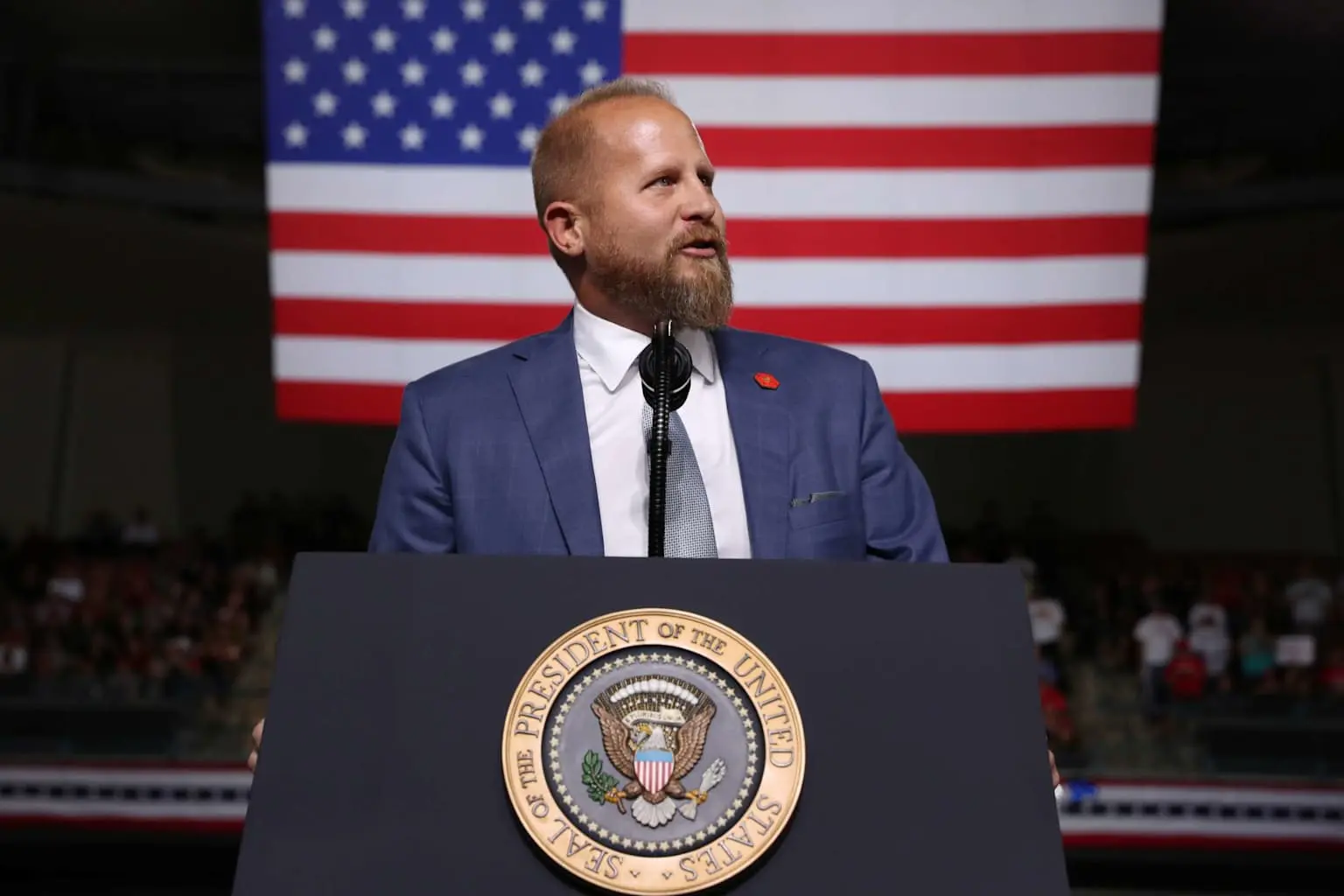
IMAGE: Brad Parscale, whose firm Clock Tower X sits at the centre of a wider network of subcontractors, media placement firms and political financiers. (Source: ABC News)
SparkFire Technologies received $6 million of the Israeli funds to run an AI-powered mass-texting operation, using a tool it calls “the flywheel” to send Americans personalised messages that steer conversations toward pro-Israel content and links, then analyse and store each response to refine future targeting. The company claims a 45 percent conversion rate. The texts are sent under the banner of ostensibly independent “peace” organisations, whose names disclose nothing about the Israeli government money funding them.
Money also flowed back toward Parscale’s other ventures. Texas businessman Tim Dunn, who co-founded Jackson Parker with Parscale in early 2025, chairs the Christian Advisory Board of the Israel Allies Foundation. Dunn’s Hexagon Foundation gave $70 million in 2025 to WaterStone, the nonprofit that used the money to take full ownership of Salem Media. The same network of relationships connects the man funding Salem’s new ownership structure to the man running the Israeli-funded campaign that paid Salem’s advertising subsidiary for airtime.

IMAGE: Tim Dunn, the West Texas oil executive behind CrownQuest and CrownRock, chairs the Christian Advisory Board of the Israel Allies Foundation — and sits at the centre of a funding network that stretches from a Trump-aligned super PAC to a $70 million charitable gift that helped take Salem Media private. (Source: Texas Tribune)
We have already opened a parallel investigation into Tim Dunn and his son David. Tim Dunn chairs the Christian Advisory Board of the Israel Allies Foundation and has funnelled millions into political vehicles like the Jefferson Rising Fund and MAGA Inc. Meanwhile, his son David, a Nashville-based Christian musician, sits on the board of WaterStone, a Christian donor-advised fund that moved $337 million last year to over 1,000 churches and ministries, with donor identities legally shielded from public view. A family running a formal political influence campaign in the open, while also helping govern one of the nation’s largest anonymous charitable pipelines, raises an obvious question. We hope to establish whether this anonymous charitable pipeline serves the same underlying agenda as Tim Dunn’s open political project of advancing Israel-aligned influence in U.S. legislatures, or if the two are genuinely separate. That’s what we’re chasing next.
None of this occurred in isolation. Quincy Institute research published in July 2026 found that Israel has spent more than $1 billion on public diplomacy since October 2023, with more than $100 million disclosed under FARA, putting the country on pace to become the largest single FARA registrant of any foreign government in 2026. Seventeen new firms registered between 2024 and 2025, and Clock Tower X’s $46.5 million contract is one of them. The same research documented the Esther Project, in which Israel paid fourteen to eighteen social media influencers roughly $7,000 per post through Bridges Partners beginning in June 2025. Only one of those influencers registered as a foreign agent as required. The Quincy Institute and Public Citizen sent a joint letter to the Justice Department demanding disclosure of the others.
Two paths, one destination
The advocacy campaign built around Ackerman, Herzog’s office and the 8200 Alumni Association operates in public, under real names, through institutions that identify themselves. The paid campaign built around Clock Tower X operates through websites whose government funding is disclosed only in a footer few readers reach. Both target the same systems. Both describe their purpose in the language of correcting distortion, countering antisemitism and restoring accuracy. Both name the same companies, OpenAI, Anthropic, Google and Meta, as the decisive terrain.
Vice President JD Vance gave the clearest public sign that this activity has reached the attention of the U.S. government. On the Joe Rogan Experience in July 2026 he described a TIME investigation listing “a bunch of people who have been paid by a former Trump campaign person who was himself paid by certain elements within the Israeli government,” calling it “a very discreet, extremely well-funded campaign” aimed at undermining a U.S.-Iran ceasefire. TIME confirmed Parscale as the figure and reported that an Israeli Foreign Ministry official said the campaign’s underlying goal was “preventing young conservatives from turning against Israel.” Vance spoke about foreign policy debate. The same funding structure, personnel and company are documented in the AI context as well.
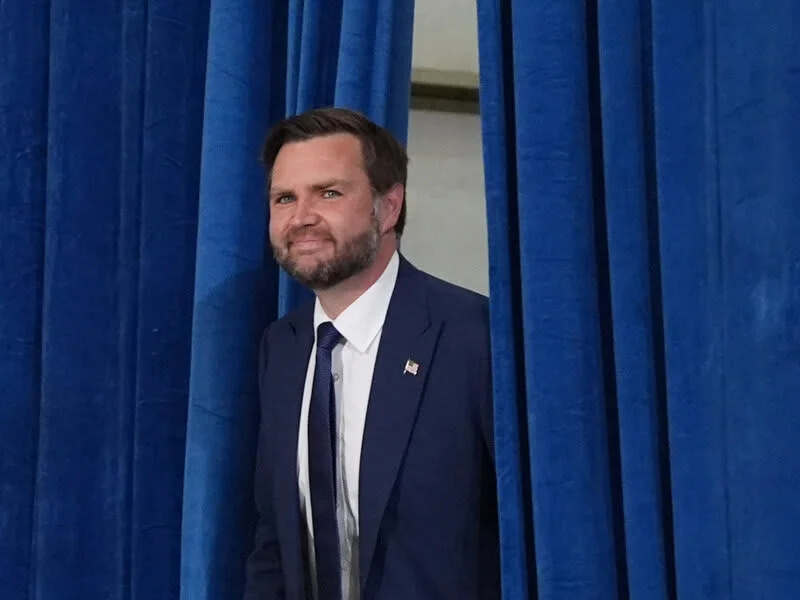
IMAGE: Vice President JD Vance, whose July 2026 interview with Joe Rogan included remarks on a TIME investigation into Israeli-linked funding aimed at swaying AI systems and U.S.-Iran policy debate. (Source: The New York Times)
What the disclosed record shows is a government that concluded traditional public diplomacy was no longer sufficient and moved, through two distinct and differently funded channels, to influence the systems that a growing share of the public now consults to understand what is true. One channel operates through named researchers and a president’s civilian initiative in full public view. The other operates through a media contractor, an advertising network and a chain of subcontractors whose government funding surfaces only to those who dig for it. Both were built at the exact moment Israel’s conduct in Gaza, Lebanon and the West Bank drew the heaviest international condemnation of its history, and both were aimed at the same handful of companies that now shape what billions of people treat as fact.
Israel did not build this machinery to fight prejudice it stumbled upon. It built it because the war made the truth a liability, and the machines that increasingly decide what counts as truth became a target worth buying and staffing at scale.
READ MORE ISRAEL NEWS AT: 21st CENTURY WIRE Israel FILES
SUPPORT OUR INDEPENDENT MEDIA PLATFORM – BECOME A MEMBER @21WIRE.TV
VISIT OUR TELEGRAM CHANNEL