

Visionary: Larry McDonald’s stark predictions manifest today

21st Century Wire says…

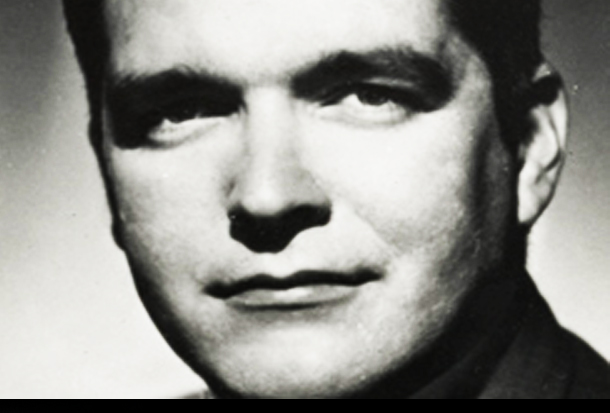
It’s a name that most people today aren’t familiar with, yet he was a man so far ahead of his time, one of those rare American individuals who could not only see what direction society and world was moving, but was courageous enough to challenge the elite power structure through his public life.


Some 30 years ago in September of 1983, Korean Airliner KAL007 was shot down in one of the most mysterious and murky episodes in modern history. Among the passengers on the ill-fated flight was as a U.S. representative from northwest Georgia’s 7th Congressional District, Congressman Lawrence Patton McDonald M.D.

As it turns out, Larry McDonald was right about so much, and possessed the foresight to see today’s globalization, WTO, the EU super state and the disintegration of the United States as a constitutional republic. Incredibly, McDonald also outlined (in the video interview below) how the US federal government would eventually move towards socialism, and restrict the Second Amendment and gun ownership in America. A visionary, to say the least.

He was also a member of the national council for the John Birch Society since 1966, and was named its chairman in March of of 1983. He described the society as “a constitutionalist education-action organization.”

Sadly, he life and political career were cut short…


Brasscheck TV revisits…

‘Dead within four months of this interview’

- He was right about Bill Casey who turned out to be a criminal on an EPIC scale. 
- He was correct about the negative impact of the government-created phenomenon of inflation (starting in 1983.)
- He was also correct about about the Federal government’s obsession with impinging on gun rights and shredding the Constitution. 

Around May of 1983, approximately 4 months before being shot down in KAL007, Congressman Larry McDonald takes on Pat Buchanan and Tom Braden on Crossfire, as they badger him about his new role as Chairman of the John Birch Society. He easily handles them and answers questions concerning the Elite’s Conspiracy for a One World Government…


McDonald explains why Congress passes too many laws and warns of the dangers of an uninformed electorate…


-

facebooktwittergoogle_plusredditpinterest

Eyewitness: ‘Tamerlan was run over by Boston police and then shot multiple times’

BOSTON CRIME SCENE REVISITED – EXHIBIT #2

21st Century Wire
says…

We’re continuing our revisit of the Boston Bombing crime scene – from the beginning. Here’s something we’ve uncovered recently which should be of interest…

tamerlan-tsarnaev2.siThe official explanation told to the public by law enforcement and FBI, is that the older brother in question was shot in a fire fight with police and then run over by a stolen Mercedes SUV driven by his younger brother Dzhokhar

We’ve also already shown that our original analysis was correct – that a police firing squad tried to murder the unarmed younger brother Dzhokhar when he  was discovered hiding under a tarp in a boat – and police still haven’t explained very well how his throat was somehow lacerated so badly that he has ended up in serious condition and unable to speak. This was one of numerous exhibits we believe to have uncovered and highlighted – of police denial and misinformation that should further call into question their credibility regarding official accounts of what happened and when it happened.

On top of this, we’ve also uncovered the video evidence where Boston Bombing suspect Tamerlan Tsarnaev appears to be alive, naked and escorted by police handcuffed and taken into a squad car. Whatever authorities claim happened after that is still at odds with the available evidence. 

New evidence…

Now an additional piece of eyewitness evidence has surfaced from a radio broadcast which aired on Friday April 19, 2013 on WEEI 93.7 FM in Boston, where a caller named “Linda” explains how the shootout transpired on Dexter Street in Watertown during the early morning hours. She is describing how she saw the first suspect, Tamerlan, was run over by a police SUV and then mortally wounded by multiple police gun shots, after which time the police began their incredible manhunt for the second suspect Dzhokhar. She ends the interview by stating how the police had ordered her to stay inside for the rest of the night.

More and more, it appears that perhaps suspect Tamerlan Tsarnaev was terminated with extreme prejudice. So we are posing this question: does someone not want either of these two brothers to tell their story in public? Listen, and you decide…


Listen to the original audio clip at WEEI

Don’t expect your corporate media to do their jobs. Keep asking questions about Boston, because NO ONE ELSE will…


.


RELATED: The Case of Boston’s Disappearing Bomb Squad

-
facebooktwittergoogle_plusredditpinterest

Her Name is Rachel Corrie


Eileen Fleming

Veracity Voice

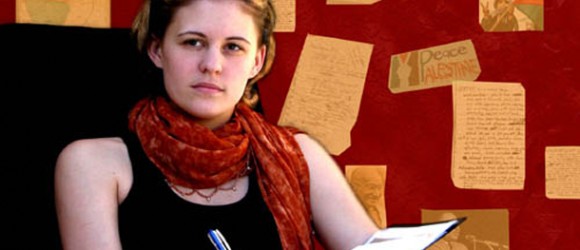
“My Name is Rachel Corrie” is based on the writings and journals of Rachel Corrie, the 23-year-old Evergreen State College student, who traveled to the Gaza Strip in 2003 and was run over and killed by a USA MADE Caterpillar D9R armored bulldozer which was operated by Israeli Forces, on March 16th, which was just a few days before President Bush began the bombing of Baghdad.

Ariel Sharon, the Israeli prime minister at the time of Corrie’s death, promised a “thorough, credible and transparent investigation” would be conducted. 


An internal military inquiry cleared the two soldiers operating the bulldozer was even criticized by US officials.

Human Rights Watch noted it “fell far short of the transparency, impartiality and thoroughness required by international law”.

The army report said Rachel Corrie “was struck as she stood behind a mound of earth that was created by an engineering vehicle operating in the area and she was hidden from the view of the vehicle’s operator who continued with his work. Corrie was struck by dirt and a slab of concrete resulting in her death.”

Tom Dale, a British activist who was 10m away when Corrie was killed, wrote an account of the incident two days later. He described how she first knelt in the path of an approaching bulldozer and then stood as it reached her. She climbed on a mound of earth and the crowd nearby shouted at the bulldozer to stop. He said the bulldozer pushed her down and drove over her.

“They pushed Rachel, first beneath the scoop, then beneath the blade, then continued till her body was beneath the cockpit. They waited over her for a few seconds, before reversing. They reversed with the blade pressed down, so it scraped over her body a second time. Every second I believed they would stop but they never did.”

Rachel has been eulogized and demonized, celebrated and castigated. Her words and witness speak for themselves and what follows are but a few excerpts from her emails written while in the homes of strangers who became friends and family in Rafah.

In January 2003, upon leaving Olympia, Washington, Rachel wrote:

We are all born and someday we’ll all die…to some degree alone. What if our aloneness isn’t a tragedy?  What if our aloneness is what allows us to speak the truth without being afraid? What if our aloneness is what allows us to adventure – to experience the world as a dynamic presence – as a changeable, interactive thing?

On February 7, 2003, Rachel wrote:

No amount of reading, attendance at conferences, documentary viewing and word of mouth could have prepared me for the reality of the situation here. You just can’t imagine it unless you see it – and even then you are always well aware that your experience of it is not at all the reality…Nobody in my family has been shot, driving in their car, by a rocket launcher from a tower at the end of a major street in my hometown…When I leave for school or work I can be relatively certain that there will not be a heavily armed soldier waiting…at a checkpoint with the power to decide whether I can go about my business, and whether I can get home again when I’m done…I am in Rafah: a city of about 140,000 people, approximately 60% of whom are refugees – many of whom are twice or three times refugees. Today, as I walked on top of the rubble where homes once stood, Egyptian soldiers called to me from the other side of the border, ‘Go! Go!’ because a tank was coming. And then waving and [asking] ‘What’s your name?’

Something disturbing about this friendly curiosity.

It reminded me of how much, to some degree, we are all kids curious about other kids. Egyptian kids shouting at strange women wandering into the path of tanks. Palestinian kids shot from the tanks when they peak out from behind walls to see what’s going on. International kids standing in front of tanks with banners. Israeli kids in the tanks anonymously – occasionally shouting and also occasionally waving – many forced to be here, many just aggressive – shooting into the houses as we wander away…There is a great deal of concern here about the “reoccupation of Gaza”. Gaza is reoccupied every day to various extents but I think the fear is that the tanks will enter all the streets and remain here instead of entering some of the streets and then withdrawing after some hours or days to observe and shoot from the edges of the communities. If people aren’t already thinking about the consequences of this war for the people of the entire region then I hope you will start….

Currently, the Israeli army is building a fourteen-meter-high wall between Rafah in Palestine and the border, carving a no-mans land from the houses along the border. Six hundred and two homes have been completely bulldozed according to the Rafah Popular Refugee Committee. The number of homes that have been partially destroyed is greater. Rafah existed prior to 1948, but most of the people here are themselves or are descendants of people who were relocated here from their homes in historic Palestine—now Israel. Rafah was split in half when the Sinai returned to Egypt.

In addition to the constant presence of tanks along the border and in the western region between Rafah and settlements along the coast, there are more IDF towers here than I can count—along the horizon, at the end of streets. Some just army green metal. Others these strange spiral staircases draped in some kind of netting to make the activity within anonymous. Some hidden, just beneath the horizon of buildings. A new one went up the other day in the time it took us to do laundry and to cross town twice to hang banners.

Despite the fact that some of the areas nearest the border are the original Rafah with families who have lived on this land for at least a century, only the 1948 camps in the center of the city are Palestinian controlled areas under Oslo.

But as far as I can tell, there are few if any places that are not within the sights of some tower or another. Certainly there is no place invulnerable to Apache helicopters or to the cameras of invisible drones we hear buzzing over the city for hours at a time.

…According to the municipal water office the wells destroyed last week provided half of Rafah’s water supply. Many of the communities have requested internationals to be present at night to attempt to shield houses from further demolition. After about ten p.m. it is very difficult to move at night because the Israeli army treats anyone in the streets as resistance and shoots at them. So clearly we are too few.

Many people want their voices to be heard, and I think we need to use some of our privilege as internationals to get those voices heard directly in the US, rather than through the filter of well-meaning internationals such as myself. I am just beginning to learn, from what I expect to be a very intense tutelage, about the ability of people to organize against all odds, and to resist against all odds.

People here watch the media, and they told me again today that there have been large protests in the United States and “problems for the government” in the UK. So thanks for allowing me to not feel like a complete Polyanna when I tentatively tell people here that many people in the United States do not support the policies of our government, and that we are learning from global examples how to resist.

February 20, 2003:

Now the Israeli army has actually dug up the road to Gaza, and both of the major checkpoints are closed. This means that Palestinians who want to go and register for their next quarter at university can’t. People can’t get to their jobs and those who are trapped on the other side can’t get home; and internationals, who have a meeting tomorrow in the West Bank, won’t make it. We could probably make it through if we made serious use of our international white person privilege, but that would also mean some risk of arrest and deportation, even though none of us has done anything illegal.

The Gaza Strip is divided in thirds now. There is some talk about the “reoccupation of Gaza”, but I seriously doubt this will happen, because I think it would be a geopolitically stupid move for Israel right now. I think the more likely thing is an increase in smaller below-the-international-outcry-radar incursions and possibly the oft-hinted “population transfer”.

…A move to reoccupy Gaza would generate a much larger outcry than Sharon’s assassination-during-peace-negotiations/land grab strategy, which is working very well now to create settlements all over, slowly but surely eliminating any meaningful possibility for Palestinian self-determination. Know that I have a lot of very nice Palestinians looking after me…

February 27, 2003:

…I have bad nightmares about tanks and bulldozers outside our house…Sometimes the adrenaline acts as an anesthetic for weeks and then in the evening or at night it just hits me again – a little bit of the reality of the situation. I am really scared for the people here. Yesterday, I watched a father lead his two tiny children, holding his hands, out into the sight of tanks and a sniper tower and bulldozers and Jeeps because he thought his house was going to be exploded. Jenny and I stayed in the house with several women and two small babies. It was our mistake in translation that caused him to think it was his house that was being exploded. In fact, the Israeli army was in the process of detonating an explosive in the ground nearby – one that appears to have been planted by Palestinian resistance.

This is in the area where Sunday about 150 men were rounded up and contained outside the settlement with gunfire over their heads and around them, while tanks and bulldozers destroyed 25 greenhouses – the livelihoods for 300 people. The explosive was right in front of the greenhouses – right in the point of entry for tanks that might come back again. I was terrified to think that this man felt it was less of a risk to walk out in view of the tanks with his kids than to stay in his house. I was really scared that they were all going to be shot and I tried to stand between them and the tank. This happens every day, but just this father walking out with his two little kids just looking very sad, just happened to get my attention more at this particular moment, probably because I felt it was our translation problems that made him leave.

I thought a lot about what you said on the phone about Palestinian violence not helping the situation. Sixty thousand workers from Rafah worked in Israel two years ago. Now only 600 can go to Israel for jobs. Of these 600, many have moved, because the three checkpoints between here and Ashkelon (the closest city in Israel) make what used to be a 40-minute drive, now a 12-hour or impassible journey. In addition, what Rafah identified in 1999 as sources of economic growth are all completely destroyed – the Gaza international airport (runways demolished, totally closed); the border for trade with Egypt (now with a giant Israeli sniper tower in the middle of the crossing); access to the ocean (completely cut off in the last two years by a checkpoint and the Gush Katif settlement). The count of homes destroyed in Rafah since the beginning of this intifada is up around 600, by and large people with no connection to the resistance but who happen to live along the border……about non-violent resistance.

When that explosive detonated yesterday it broke all the windows in the family’s house. I was in the process of being served tea and playing with the two small babies. I’m having a hard time right now. Just feel sick to my stomach a lot from being doted on all the time, very sweetly, by people who are facing doom. I know that from the United States, it all sounds like hyperbole. Honestly, a lot of the time the sheer kindness of the people here, coupled with the overwhelming evidence of the willful destruction of their lives, makes it seem unreal to me. I really can’t believe that something like this can happen in the world without a bigger outcry about it.

It really hurts me, again, like it has hurt me in the past, to witness how awful we can allow the world to be…you actually do go and do your own research. But it makes me worry about the job I’m doing. All of the situation that I tried to enumerate above – and a lot of other things – constitutes a somewhat gradual – often hidden, but nevertheless massive – removal and destruction of the ability of a particular group of people to survive. This is what I am seeing here. The assassinations, rocket attacks and shooting of children are atrocities – but in focusing on them I’m terrified of missing their context.

The vast majority of people here – even if they had the economic means to escape, even if they actually wanted to give up resisting on their land and just leave (which appears to be maybe the less nefarious of Sharon’s possible goals), can’t leave…they can’t even get into Israel to apply for visas, and because their destination countries won’t let them in (both our country and Arab countries).
…when all means of survival is cut off in a pen (Gaza) which people can’t get out of, I think that qualifies as genocide. Even if they could get out, I think it would still qualify as genocide. Maybe you could look up the definition of genocide according to international law…

When I come back from Palestine, I probably will have nightmares and constantly feel guilty for not being here, but I can channel that into more work. Coming here is one of the better things I’ve ever done. So when I sound crazy, or if the Israeli military should break with their racist tendency not to injure white people, please pin the reason squarely on the fact that I am in the midst of a genocide which I am also indirectly supporting, and for which my government is largely responsible.

February 28, 2003:

…I spent a lot of time writing about the disappointment of discovering, somewhat first-hand, the degree of evil of which we are still capable. I should at least mention that I am also discovering a degree of strength and of basic ability for humans to remain human in the direst of circumstances – which I also haven’t seen before. I think the word is dignity. I wish you could meet these people. Maybe, hopefully, someday you will…

I think I could see a Palestinian state or a democratic Israeli-Palestinian state within my lifetime. I think freedom for Palestine could be an incredible source of hope to people struggling all over the world. I think it could also be an incredible inspiration to Arab people in the Middle East, who are struggling under undemocratic regimes which the US supports.

I look forward to increasing numbers of middle-class privileged people like you and me becoming aware of the structures that support our privilege and beginning to support the work of those who aren’t privileged to dismantle those structures.

I look forward to more moments like February 15 when civil society wakes up en masse and issues massive and resonant evidence of it’s conscience, it’s unwillingness to be repressed, and it’s compassion for the suffering of others.

I look forward to more teachers emerging like Matt Grant and Barbara Weaver and Dale Knuth who teach critical thinking to kids in the United States.

I look forward to the international resistance that’s occurring now fertilizing analysis on all kinds of issues, with dialogue between diverse groups of people.

I look forward to all of us who are new at this developing better skills for working in democratic structures and healing our own racism and classism and sexism and heterosexism and ageism and ableism and becoming more effective.

In fifth grade, at the age of ten, Rachel Corrie wrote her heart out and stated it at a Press Conference on World Hunger in 1990:

I’m here for other children.
I’m here because I care.
I’m here because children everywhere are suffering and because forty thousand people die each day from hunger.
I’m here because those people are mostly children.
We have got to understand that the poor are all around us and we are ignoring them.
We have got to understand that these deaths are preventable.
We have got to understand that people in third world countries think and care and smile and cry just like us.
We have got to understand that they dream our dreams and we dream theirs.
We have got to understand that they are us. We are them.
My dream is to stop hunger by the year 2000.
My dream is to give the poor a chance.
My dream is to save the 40,000 people who die each day.
My dream can and will come true if we all look into the future and see the light that shines there.
If we ignore hunger, that light will go out.
If we all help and work together, it will grow and burn free with the potential of tomorrow.

1. http://rachelcorriefoundation.org/site/about-rachel-corrie/rachels-emails-from-palestine/

-
Writer Eileen Fleming is a regular columnist for Veracity Voice

Eileen Fleming, Founder of WeAreWideAwake.org
A Feature Correspondent for Arabisto.com 
Author of “Keep Hope Alive” and “Memoirs of a Nice Irish American ‘Girl’s’ Life in Occupied Territory”
Producer “30 Minutes with Vanunu” and “13 Minutes with Vanunu”

facebooktwittergoogle_plusredditpinterest

Passing of Venezuelan Leader Hugo Chavez leaves tears – and a nation divided


DAVID USBORNE
The Independent

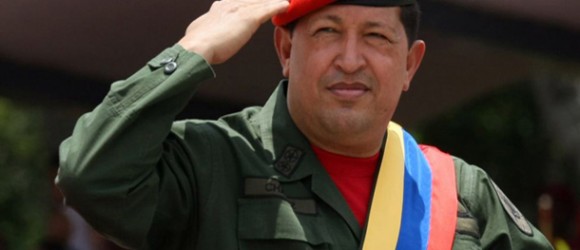
After struggling for many gruelling months with cancer the form of which was never fully disclosed, Hugo Chavez, the firebrand president of Venezuela, adversary of the United States and former soldier, finally succumbed – passing away at the age of 58 in a Caracas military hospital.

While his death will end months of suspense that have cast a shadow of uncertainty across both his country and its leftist allies in the region, it now also plunges one of the world’s leading petro-nations into what is certain to be pitched political struggle, the outcome of which remains uncertain.

Not that the socialist state machine that Mr Chavez led has not had time to prepare. After winning a third term as President last October, Mr Chavez abruptly declared on 10 December last year that he was once again in the grip of the cancer that was first diagnosed in July 2011. The next day, after a tearful national television broadcast, he vanished to Havana, Cuba, for treatment. He was never to be seen publicly again.

The death of one of Latin America’s most egotistical, bombastic and polarising leaders was announced on television by Vice-president Nicolas Maduro, who is now expected to fight in a snap election to succeed him. Mr Chavez, he told a shocked nation, had died “after battling a tough illness for nearly two years”.

The prolonged absence of Mr Chavez had already caused tensions, notably since his failure to turn up for his own inauguration in Caracas in January. Against furious remonstrations from the opposition, the government insisted at the time that the leader was still in charge of the nation from his hospital bed.

Opposition patience with this and with the relative lack of clear information of what the actual condition of Mr Chavez was had been wearing extremely thin. In mid-February, the government allowed the first pictures of Mr Chavez to be published, which showed him in his hospital cot being attended to by two of his daughters. Shortly thereafter he was flown in the dead of night to Caracas, where he was installed in the main military hospital. It seems now that he was moved so he could at least die on his own soil.

The constitution now demands that elections be held across the country within 30 days to elect a new president and Vice-president Maduro and his allies will doubtless attempt to capitalise on public sympathy. His death comes, however, at a time of uncertainty for Venezuela. Inflation and the rate of violent crime have soared and Mr Chavez leaves a population that is politically deeply divided.

While Mr Maduro will vow to extend the so-called Bolivarian socialist revolution that was begun by Mr Chavez, the opposition has a seasoned candidate in Henrique Capriles, a provincial governor, who built a wide base of support fighting in the presidential contest last summer.

The announcement came just hours after Mr Maduro announced the government had expelled two US diplomats from the country, suggesting that the US and its allies had been responsible for Mr Chavez contracting cancer. “We have no doubt” that Chavez’s cancer had been somehow induced by foul play by “the historical enemies of our homeland”, the Vice-president said.

Just as Mr Chavez was divisive in his political life, his passing provoked reactions ranging from despair to delight. “Hugo Chavez was a tyrant who forced the people of Venezuela to live in fear,” declared the top Republican on the House Foreign Affairs Committee in Washington, Ed Royce. Meanwhile, President Cristina Kirchner, an ally who may have designs on replacing him as Latin America’s scourge of Washington, said all government activities in Argentina were being suspended as a tribute.

“He was a generous man to all the people in this continent who needed him,” a visibly emotional Dilma Rousseff, the President of Brazil, said in Brasilia. President Barack Obama issued a conciliatory statement. “At this challenging time of President Hugo Chavez’s passing, the United States reaffirms its support for the Venezuelan people and its interest in developing a constructive relationship with the Venezuelan government,” he said.

Vice-President’s statement: ‘Hardest news we’ll ever give the people’

“We came here to the military hospital to follow the sequence of our comandante president’s health. We were receiving information and we were accompanying his daughters, his brother, his family members and we received the hardest and the most tragic of news that we will ever transmit to our people. At 4:25 in the afternoon, today, the 5th of March, Comandante President Hugo Chavez Frias died.”

Hugo Chavez: His rise to power

28 July, 1954 Hugo Chavez Frias is born to a working-class family in Sabaneta in the state of Barinas.

1971 Enrols at the Academy of Military Sciences, graduates in 1975.

1982 Creates a new political cell within the army with two fellow officers. Called the MBR200 it is committed to overthrowing the “corrupt” political establishment.

1989 Now Lieutenant Chavez, he falls ill and is not called to suppress riots in Caracazo, which leave hundreds dead. Friends say his “missed opportunity” led him to intensify his preparations for a coup.

1992 Under Colonel Chavez’s command, soldiers loyal to the MBR200 try to seize key installations including the Miraflores presidential palace. The coup fails and he surrenders, giving a national televised address before being sent to prison.

1994 Receives pardon from President Rafael Caldera and is freed.

1998 Wins presidential election and promises to seek “third way” between socialism and capitalism.

1999 Venezuelans vote to accept a new Chavez-backed constitution, including renaming the country the Bolivarian Republic of Venezuela.

2000 Re-elected to new six-year term.

2002 Protesters demand resignation. Dissident generals oust Chavez and clear way for interim government.

2002 Following huge protests by Chavez supporters, loyal army officers rescue Chavez, restore him to power.

2004 Venezuelans overwhelmingly vote against a referendum asking if Chavez should leave office.

2006 Chavez calls US President George W Bush “the devil” in speech before UN General Assembly.

2007 Government nationalises Venezuela’s largest private electric company.

2008 Chavez orders US ambassador to leave, accusing him of conspiring against his government.

2011 Undergoes surgery in Cuba for pelvic abscess. Confirms he had a cancerous tumour removed.

2012 Undergoes operation removing another tumour. Travels to Cuba to begin radiation therapy.

5 March 2013 Chavez dies after a battle with cancer.

facebooktwittergoogle_plusredditpinterest

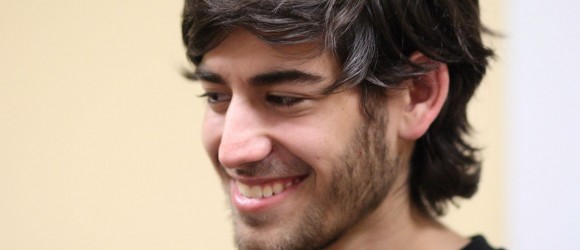
Cover-up: Did The CIA ‘Suicide’ Aaron Swartz?

It is amazing that no media outlets are attempting to cover this story, especially since Swartz’s own father accused elements of the US government of being responsibly for Aaron’s death.

facebooktwittergoogle_plusredditpinterest

Furry Over Poland Claims of Explosives on 2010 Presidential Plane Crash – Key Witness Found Hanged

The plane crash that killed Poland’s president and more than 90 other people was not an accident—at least for a little while. A Polish newspaper, Rzeczpospolita, reported that traces of explosives were found in the plane’s wreckage, including enough evidence of TNT and nitroglycerine on 30 seats to jolt a detection device “off the scale.” The claim provoked a public uproar as well as condemnation from the Polish government, whose official inquiry concluded the accident was just that and that no foul play was involved. Shortly after publishing its story, the newspaper issued a partial retraction that said the findings of explosive residues were not as definitive as it had initially reported. Soil, perfume or everyday objects are no different than TNT in how they would cause the explosives detectors to respond, professed the newspaper. Another theory it offered is that the equipment may have sniffed out some old World War II bombs and shell casings that had been lying around the area for over six decades. The plane carrying President Lech Kaczynski and 95 others crashed in 2010 on approach to Russia’s Smolensk North Airport, which was shrouded in a thick fog. Conspiracy theories surrounded the accident even before the controversial story. A flight engineer, Remigiusz Mus, who flew into the airport before the crash, claimed Russian air traffic controllers allowed his plane to descend to a low altitude before landing, which contradicted an official investigation by the government. Mus was scheduled to testify before a parliamentary investigation. But his body was found over the weekend hanged in his house in Warsaw, presumably a suicide. Antoni Macierewicz, head of the parliamentary commission investigating the case, urged that the only other surviving witness, Artur Wosztyl, be placed in protective custody. Another bizarre tragedy occurred in January 2012, when a Polish prosecutor working on the case inexplicably shot himself in the head during a press briefing. Source: All Govfacebooktwittergoogle_plusredditpinterest

Strange and Connected Events This Week

Strange events are afoot… Millionaire Iraqi-British family gets slaughtered in France. The British head of Exxon-Mobile gets hit in Belgium this week. CNBC runs story of spire law firms 43 trillion dollars lawsuit against banks and politicians in the U.S. to return money to U.S. Treasury. The next day, the 2 and 6 year old children of Kevin Krim (who is the senior vice-president of CNBC digital) were repeatedly and savagely stabbed to death. Now CNBC has scrubbed the story about the lawsuit. I’m not saying these things are connected but, it seems like some people feel like they can get away with anything right now… What’s happening?facebooktwittergoogle_plusredditpinterest

Mystery of the helicopter landed at scene of Dr Kelly’s death after his body was found

By Miles Goslett Daily Mail Last updated at 2:27 PM on 14th May 2011 A helicopter mysteriously landed at the scene of Dr David Kelly’s death shortly after the body was found. The aircraft only remained on the ground for five minutes before leaving, suggesting it either deposited or collected somebody or something. Details from its flight log, released under the Freedom of Information Act, show that the helicopter – hired by Thames Valley police – landed at Harrowdown Hill in Oxfordshire at 10.55am on July 18, 2003, 90 minutes after the body was discovered by volunteer search teams.

BIZARRE: A helicopter briefly landed at the scene of Dr Kelly's death - after the body was found - at Harrowdown Hill in Oxfordshire. Details of the aircraft, hired by police, have been withheld (file picture)

Significantly, the flight log has been heavily redacted, making it impossible to know who was on board or what its exact purpose was. The flight was not mentioned in oral evidence at the Hutton Inquiry, set up by Tony Blair to investigate Dr Kelly’s death. Dr Andrew Watt, who has previously raised questions about the suicide finding reached by Lord Hutton, has written to Attorney General Dominic Grieve drawing his attention to the flight. Dr Watt, a clinical pharmacologist, said: ‘If the purpose of the helicopter flight was innocent, one has to ask why it was kept secret.’  The riddle joins the growing list of unanswered questions about the circumstances of the government weapons inspector’s final moments. It emerges in the same week that Tony Blair and Alastair Campbell were accused of lying to the Chilcot Inquiry into the lead-up to the Iraq war. The Mail reported yesterday how declassified documents from the inquiry revealed a spy chief disputed Campbell’s claim that the dossier was ‘not the case for war’. A senior diplomat also accused the former prime minister of distorting expert reports about the post-war chaos. Dr Kelly is said to have killed himself in woods near his home after being named as the prime source of a BBC report accusing the Labour government of lying to take Britain into war in Iraq… Uniquely for a suspicious death, no coroner’s inquest has been held. Instead, the Hutton Inquiry found he committed suicide by swallowing painkillers and cutting his wrist with a blunt knife. Dr Kelly left no suicide note and had arranged to meet his daughter on July 17, 2003, the day he was last seen alive.
 More…
 He had also made plans to see friends the following week and, on the morning of his death, booked a return ticket to Iraq  in connection with his work. The latest disclosure comes as Attorney General Mr Grieve prepares to announce whether there will be an inquest into Dr Kelly’s death. He has waited almost a year to reach a decision. In opposition, Mr Grieve told at least two fellow MPs privately that he had misgivings about the Kelly affair. Last June, after the Coalition was formed, he asked anyone with new information about Dr Kelly’s death to send it to him and over the last nine months has been informed of several pieces of material evidence which were never raised at the Hutton Inquiry. Crucially, a non-statutory public inquiry such as Hutton has none of the powers of a coroner’s inquest. Witnesses, including Mr Blair and Mr Campbell, did not swear an oath before giving evidence. A group of doctors has begun a legal action to try to secure an inquest. Papers submitted through their lawyers Leigh Day & Co say the suicide finding is medically implausible and should be investigated fully by an experienced coroner, not a judge. The doctors have set up a fund to raise £25,000 for a judicial review in case Mr Grieve decides there is no case for an inquest. Dr Michael Powers QC, representing the doctors, said: ‘Dominic Grieve has been sitting on a substantial amount of new evidence for a very long time. ‘In law, the case for a coroner’s inquest is unanswerable.’ Read original report herefacebooktwittergoogle_plusredditpinterest