


Fantastic New Video by David Icke


facebooktwittergoogle_plusredditpinterest

‘Useless, useless, useless’: the Palestinian verdict on Tony Blair

Former Prime Minister’s role as representative of Middle East Quartet comes in for fiercest criticism MATTHEW KALMAN The Independent  Dec 17, 2012  Palestinian officials say Tony Blair shouldn’t take it personally, but he should pack up his desk at the Office of the Quartet Representative in Jerusalem and go home. They say his job, and the body he represents, are “useless, useless, useless”.
Mr Blair became the representative of the Middle East Quartet – the UN, EU, US and Russia – a few weeks after leaving Downing Street. Last week, he visited the region for what he said was the 90th time since being appointed in June 2007. He spends one week a month based in Jerusalem or globetrotting on behalf of the Quartet. His office is funded by the Quartet members and his 24-hour security detail is on secondment from Scotland Yard but he receives no direct salary. After four years of renting 15 rooms at the American Colony Hotel for his full-time staff, Mr Blair put down more permanent roots in 2011 by renting the penthouse of a new office building in Sheikh Jarrah, East Jerusalem.

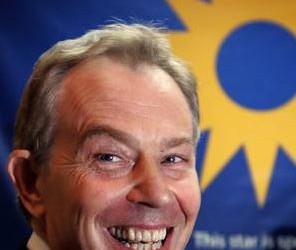
Tony Blair

But senior Palestinian officials and analysts told The Independent the move was unnecessary – his sojourn in the region should be cut short. “The Quartet has been useless, useless, useless,” Mohammed Shtayyeh, an aide to the Palestinian President Mahmoud Abbas, said last week. He suggested that its constant need to reach internal consensus among its warring participants had rendered it ineffective. “Always the statement of the Quartet really means nothing because it was always full of what they call constructive ambiguity that really took us to nowhere,” said Mr Shtayyeh, who had just ended a meeting with Mr Blair. “You need a mediator who is ready to engage and who is ready to say to the party who is destroying the peace process ‘You are responsible for it’,” he said. Mr Shtayyeh is not alone. Last February, the Saban Centre for Middle East Policy at The Brookings Institution pronounced the body already dead in a report bluntly entitled The Middle East Quartet: A Post-Mortem. “The Quartet has little to show for its decade-long involvement in the peace process. Israelis and Palestinians are no closer to resolving the conflict, and in the few instances in which political negotiations did take place, the Quartet’s role was usually relegated to that of a political bystander,” said the report. “Having spent most of the last three years in a state of near paralysis, and having failed to dissuade the Palestinians from seeking UN membership and recognition in September 2011, the Quartet has finally reached the limits of its utility. Please Read More
facebooktwittergoogle_plusredditpinterest

Nick Clegg says ‘Cut benefits for wealthy pensioners’

The Deputy Prime Minister mounted a vigorous defence of the coalition’s welfare reforms ANDREW WOODCOCK  The Independent Dec 17, 2012 Nick Clegg today opened a divide within the coalition Government by calling for the means-testing of a range of benefits for pensioners.
The Government is committed to preserving the universal benefits – such as winter fuel allowance and free bus travel, prescriptions and TV licences – until 2015, and Prime Minister David Cameron has so far resisted pressure from Tory backbenchers to signal he will cut them after the general election. But the Deputy Prime Minister today broke ranks to make clear that Liberal Democrats will “look again” at universal pensioner benefits, arguing that welfare cash “should not be paid to those who do not need it”. “I just don’t think it’s justifiable, when so many people are tightening their belts, to say multi-millionaire pensioners still receive universal benefits across the board,” said the Lib Dem leader. Asked if Mr Cameron backed Mr Clegg on the issue, the PM’s spokesman responded: “The Prime Minister made a commitment to protect those benefits and he believes in keeping his promises.” But there was dissent on the Tory backbenches, as Broxbourne MP Charles Walker said Mr Cameron should be ready to make the universal benefits taxable as income before the election, to show that the older generation are bearing their share of the burden of reducing the deficit. Mr Walker told BBC Radio 4′s PM programme that working people were “pretty sore” at seeing their child benefit and other support withdrawn or reduced, while pensioners’ payments are protected. “Certainly there is going to be inter-generational tension and that tension is going to grow in the months ahead,” he said. “I think this is bound to create ill-feeling and it is something I believe the Government needs to look at and address.” In a keynote speech marking his fifth anniversary as Lib Dem leader, Mr Clegg mounted a vigorous defence of the coalition’s welfare reforms, insisting the Government had an “absolute duty” to ensure the system was fair to all. While acknowledging the changes had at times been “painful and controversial”, he argued that the Liberal Democrats had ensured they were firmly anchored in the political centre ground. When the Conservatives proposed benefit cuts of £10 billion in the Autumn Statement, the Lib Dems had acted as a moderating force, ensuring they were held to £3.8 billion, he said. “When two-thirds of people think the benefits system is too generous and discourages work then it has to be changed, or we risk a total collapse in public support for welfare existing at all,” Mr Clegg told the CentreForum thinktank. “We need welfare protection for people who fall on hard times. Of course. But you cannot ask low-income working people to pay through their taxes for people who aren’t in work to live more comfortably than they do.” In a swipe at Chancellor George Osborne – who said the Government should be there for the “strivers” and not “shirkers” – Mr Clegg said not everyone who cannot find a job is simply being lazy. “Of course, there are some on the right who believe that no-one could possibly be out of work unless they’re a scrounger,” said the Lib Dem leader. “The siren voices of the Tory right who peddle this myth could have pulled a majority Conservative government in the direction of draconian welfare cuts.” The speech came after a bad weekend for the Liberal Democrats, who slumped into fourth place behind the UK Independence Party on 8%-9% in a series of polls. Mr Clegg’s former director of strategy, Richard Reeves, said the “curtain will probably fall” on the coalition before 2015 if the party fails to boost its support. “Next year is the year the Lib Dem strategy – deliver then differentiate – will be tested. A more assertive stance in act two of coalition should mean greater support and more votes. If not the curtain will probably fall on the coalition before 2015,” wrote Mr Reeves in The Guardian. Labour’s deputy leader Harriet Harman said: “Nick Clegg will try every trick in the book to distance himself from the record of his Government. “But, as ever with the Lib Dems, they say one thing whilst doing another – resulting in a record of economic failure, trebled tuition fees, nurses cut, police axed and millions paying more while millionaires get a tax cut. “Bearing this in mind, what we really should be hearing from Nick Clegg today is a proper apology and a declaration that from now on he will actually stick by the promises he makes.” The threat to universal benefits was denounced by some of those campaigning for the elderly. Ros Altmann, director-general of Saga, said that means-testing “may be a populist headline, but it is absolutely the wrong policy”. Please Read More 
facebooktwittergoogle_plusredditpinterest

New nuclear talks with Iran may be possible in coming weeks, U.S. says

Washington Post Joby Warrick The United States and five other world powers are hastily preparing for possible new talks with Iran amid signs that the country’s leaders might be willing to meet as early as next week to discuss scaling back nuclear activities in return for future sanctions relief. The six powers have agreed on a new package of inducements to be offered to Iran if it agrees to freeze key parts of its nuclear program, said U.S. and European officials briefed on the matter. Iran rejected a similar deal earlier this year, but U.S. officials said they were modestly hopeful that Tehran’s position had softened under the strain of international sanctions. “Our assessment is that it is possible that they are ready to make a deal,” a senior administration official said Friday. “Certainly, the pressure is on.” The talks would be the first high-level negotiations over Iran’s nuclear program since June, offering at least the prospect of a thaw in a standoff that has grown increasingly tense in recent months. The apparent movement on the diplomatic front came amid reports that Iran had agreed to concessions in a separate dispute with U.N. nuclear officials over access to an Iranian base allegedly used for nuclear weapons research. There was no confirmation from Tehran about pending talks with world powers. On Friday, a member of Iran’s nuclear negotiating team expressed skepticism about a possible deal with the six-nation bloc known as the P5-plus-1. “Personally, I am not optimistic,” Mostafa Dolatyar told reporters during a visit to India. But he added: “Everything could be subject to negotiation.” Three U.S. and European officials briefed on the preparations said Iranian negotiators were discussing a timetable for new talks, which might be held in Istanbul. Initial meetings could begin as early as next week, though they are more likely to start after the New Year’s holiday, said the officials, who spoke on the condition of anonymity to discuss diplomatically sensitive negotiations. U.S. officials said the purpose would be to test Iranian willingness to halt certain nuclear activities as an interim step, or a “confidence-building” measure, to ease international fears that Tehran is secretly developing nuclear weapons. In exchange, Iran would be offered technical help with its civilian nuclear program and a lifting of a ban on the purchase of aircraft parts, the officials said. The interim measures, if accepted, could be the starting point for a future “grand bargain” that would set permanent limits on Iran’s nuclear activities in exchange for rolling back economic sanctions, the officials said. The P5-plus-1 group — Britain, China, France, Germany, Russia and the United States — made similar demands during three fruitless rounds of talks with Iran in the spring. Iranian officials complained at the time that the group’s proposal did not contain sufficient sanctions relief and said they would await the outcome of the U.S. presidential election before resuming the effort. Since those talks, international sanctions on Iran have been tightened.facebooktwittergoogle_plusredditpinterest

New Legal Issue: Prince Charles’s £700m Estate Accused of Tax Avoidance

The duchy of Cornwall gave the prince an income of £18m last year, but says it is not subject to paying corporation tax Robert Booth Guardian HM Revenue & Customs has been asked to investigate alleged tax avoidance by Prince Charles’s £700m hereditary estate. The duchy of Cornwall last year provided Charles with an income of £18m and HMRC‘s anti-avoidance group is now being asked to examine its non-payment of corporation tax following a potentially significant court ruling on its legal status. The issue has been raised by an accountant investigating the tax affairs of the duchy – an agricultural, commercial and residential landowner. He has analysed the impact of a judicial ruling handed down last year. Anti-monarchy campaigners claim it shows the duchy is running “a well-entrenched tax avoidance scheme”. The duchy insists it “is not subject to corporation tax as it is not a separate legal entity for tax purposes”. But John Angel, principal judge at the information rights tribunal, ruled last December it was a separate legal body to the prince. Accountants now believe the ruling could leave the duchy exposed to the 24% levy on profits other organisations must pay. Any change to its tax status could result in a cut to the prince’s income. Republic, the campaign for an elected head of state, has asked HMRC’s anti-avoidance team to investigate whether the ruling means the duchy is now “using a highly questionable interpretation of its legal status as a means of avoiding corporation tax obligations”. A spokesman for HMRC said it would evaluate the information and “take appropriate action”. There is no suggestion any law has been breached. Clarence House strongly denies claims of avoidance. The move comes as the House of Commons public accounts committee, which earlier this month criticised Starbucks, Google and Amazon for their “immoral” decisions to avoid paying more corporation tax, prepares to hold a hearing next year into the royal finances. As well as duchy income, last year Charles received £2.2m in grants from the taxpayer to pay for his travel by private jet, helicopter and train and the upkeep of Clarence House. He voluntarily paid tax of £5m on his £18m income from the duchy last year, which Clarence House said was at the full 50% rate after deductions from expenses. The duchy owns 53,000 hectares of land in 23 counties, including Prince Charles’s Gloucestershire home of Highgrove. It has provided incomes to successive Princes of Wales since the 14th century. The assertion that the estate is inseparable from Charles has allowed him to use its gross profits to fund private and official spending including 26 valets, gardeners and farm staff. In the past five years he has received more than £86m from the arrangement. But when Angel was tasked with deciding if the duchy should publish information about its environmental impact, he ruled it must be considered a separate legal body to the prince because of “the differentiation of the duchy and duke in commercial and tax matters as well as under legislation and the contractual behaviour of the duchy”. The judge said: “We find that the duchy is now a body or other legal person.” Independent accountants and a firm of tax lawyers consulted by the Guardian over the claims confirmed the ruling had the potential to undermine the prince’s tax arrangements, but said it was not clear-cut. “There appears to be no legal basis on which the duchy is not taxed and there is no legal basis for the arrangement under which Prince Charles pays tax on an ad hoc basis of his own making,” said Richard Murphy, who runs Tax Research LLP, and has examined the duchy’s arrangements. “We have a token PR gesture from Prince Charles, not unlike Starbucks’ arrangement [to pay voluntary corporation tax].” Read morefacebooktwittergoogle_plusredditpinterest

‘The Jacintha Saldanha Story Doesn’t Make Sense’ Says BBC – to Ben Fellows


Ben Fellows
Before It’s News

The BBC contacted me yesterday and sent me the following email. This BBC journalist clearly admits that perhaps the government and media aren’t telling us the truth regarding the death of nurse Jacintha Saldanha and now the massacre in the US. WTF!The BBC have obviously taken leave of their senses, if they ever had any, and hired conspiracy theorists instead of journalists. Is this really what we should be paying our license fee for? Who knew that the BBC is a hot bed of conspiracy theorists.Of course the darker side of this story (and of course I’m probably going to be accused of being a conspiracy theorist) is that this is an attempt by the BBC to try to draw me out into a conversation about the terrible tragedies of Jacintha Saldanha and the recent US massacre as a back door to talking about…

Read more

facebooktwittergoogle_plusredditpinterest